Posts Tagged ‘training’

IBJ Hosts Successful Advanced Legal Training in Harare

Monday, May 31st, 2010

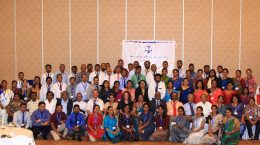
On Friday, May 14 and Saturday, May 15, the IBJ Zimbabwe Team hosted a successful advanced defender skills training in Harare, Zimbabwe. Approximately fifty Harare-based lawyers attended the continuation of last years training, including a number of senior lawyers, some who have been practicing for approximately twenty years, and others who run the Legal Aid Directorate. Of the lawyers in attendance, forty were lawyers who agreed to take criminal cases of victims of torture or those at a high risk of being torture on behalf of IBJ over the past year.

p1070847.gif

On Friday, United States federal public defender, Anthony Natale gave detailed lectures on developing a theory on the case and cross examination, providing training on practical skills that attendants found helpful and said that they would use in their day-to-day practice.

In addition, distinguished Zimbabwean lawyer Alex Muchadehama gave a presentation on the security of criminal lawyers in Zimbabwe, highlighting that lawyers should call upon the state to enforce already existing measures to ensure their safety.In an enlightening discussion, lawyers spoke about the current state Zimbabwe and what this means for the legal system. Politically, they agreed, the inclusive government has lead to a number of legislative political compromises, which have particularly affected local criminal law. Additionally, separation of powers appears to have ceased to exist. The current economic status, they noticed, has lead to a number of problems within the criminal justice system, including mass corruption throughout the justice system, where bribes have become commonplace.

On Saturday, Anthony Natale led a cross-examination demonstration, in which every attending attorney had the chance to develop and ask questions of mock witnesses. Each participating lawyer, which was over 99% of the lawyers in attendance, found this to be the most practical and educational portion of the day.

Distinguished University of Zimbabwe Professor Feltoe gave a lecture on the importance of an independent judiciary, in which he highlighted problems of corruption and political interdependence that can be found in almost any country but particularly have plagued the criminal justice system in Zimbabwe as of late. He outlined how the Constitution of Zimbabwe, African Commission principles, UN principles, and Bagalore principles all require judicial independence , but formal legal pronouncements are not enough and that implementation and observation are fundamentally important.

p1070887.gif

The lawyers in attendance spoke about the values that they, as Zimbabwean lawyers, share, which include hope, endurance, commitment and professionalism. As a constituency of lawyers, they pledged to stand up for their shared values in order to break away from the cycle of corruption in the justice system and change the Zimbabwe criminal justice system for the better.

[Slashdot] [Digg] [Reddit] [del.icio.us] [Facebook] [Technorati] [Google] [StumbleUpon]

IBJ Collaborates with the Bar Association of the Kingdom of Cambodia to hold a Workshop Defender Training Program in Phnom Penh

Tuesday, September 8th, 2009

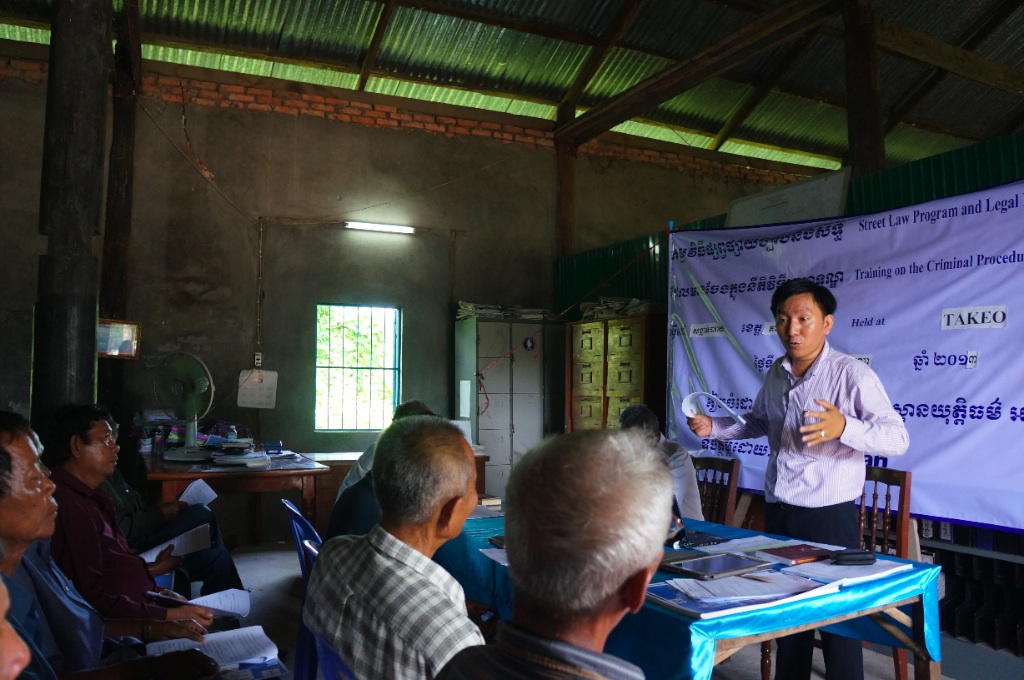
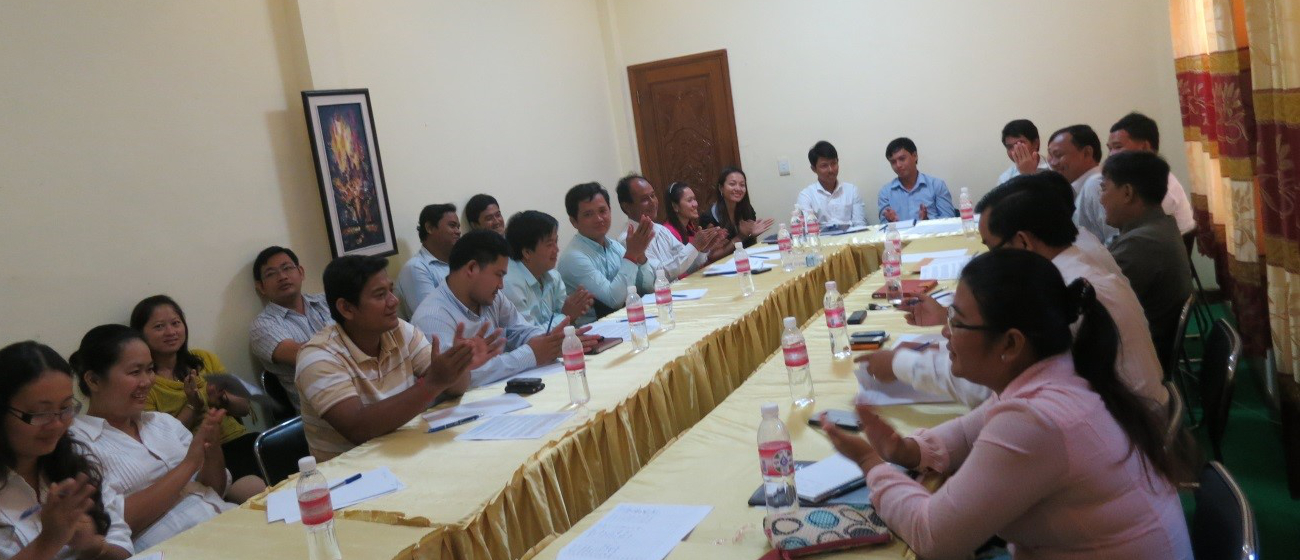
On August 27th, 2009, IBJ Cambodia and the Bar Association of the Kingdom of Cambodia (BAKC) joined together to hold a workshop defender training program in Phnom Penh. Held at the Naga World Cambodia Hotel, this highly successful event tallied up a total of 94 participants to discuss the difficulties of implementing the new criminal code procedure in Cambodia. The main objective being an overhaul of the current knowledgebase that runs throughout the defender foundation, through the combined use of past experience from both lawyers as well as law makers and law enforcement officials.

Kicking off the workshop were speeches by IBJ Fellow Ouk Vandeth as well as the Chief of the BAKC H.E. Chiv Song Hak, which led into the first of two main sessions, where lawyers and government officials introduced the procedures of accusations within the court, and evaluated the difficulties lawyers may face in relation to these accusations.

In the second half of the event, Mr. Hing Thirith, a Prosecutor from the Supreme Court, was the head speaker and articulated the procedure of investigation that takes place when in the role of an Investigating Judge. Following this,  a lawyer of the Royal Government of Cambodia spoke of the challenges a lawyer faces in the investigation stage

We saw an immense amount of interest from the crowd, with many questions being asked and problems being solved, with the facilitators, the speakers, and anyone else who may have been knowledgeable providing support through this portion of the workshop.

IBJ’s first collaboration with the BAKC resulted in a great achievement. To wind down the final moments of the workshop, the Secretary of State of MOJ, H.E. Sam Sophal, thanked all of the participants for such a keen and engaging experience, and expressed his enthusiasm with regards to the great success of the event. Through the continued alliance between IBJ and the BAKC we will be able to improve and upgrade the knowledge and awareness required for lawyers in relation to the accusation procedure as well as the investigative procedures in the system.

chantouch-21.jpg
Participants gather as the first panel of speakers opens the workshop in Phnom Penh.
(Photo: IBJ)

chantouch-9.jpg
Government officials and representatives of the Bar Association gather for the opening ceremonies
(Photo: IBJ)

[Slashdot] [Digg] [Reddit] [del.icio.us] [Facebook] [Technorati] [Google] [StumbleUpon]

Pondicherry Training Focuses on Current Challenges and Hopes for the Future

Tuesday, June 30th, 2009

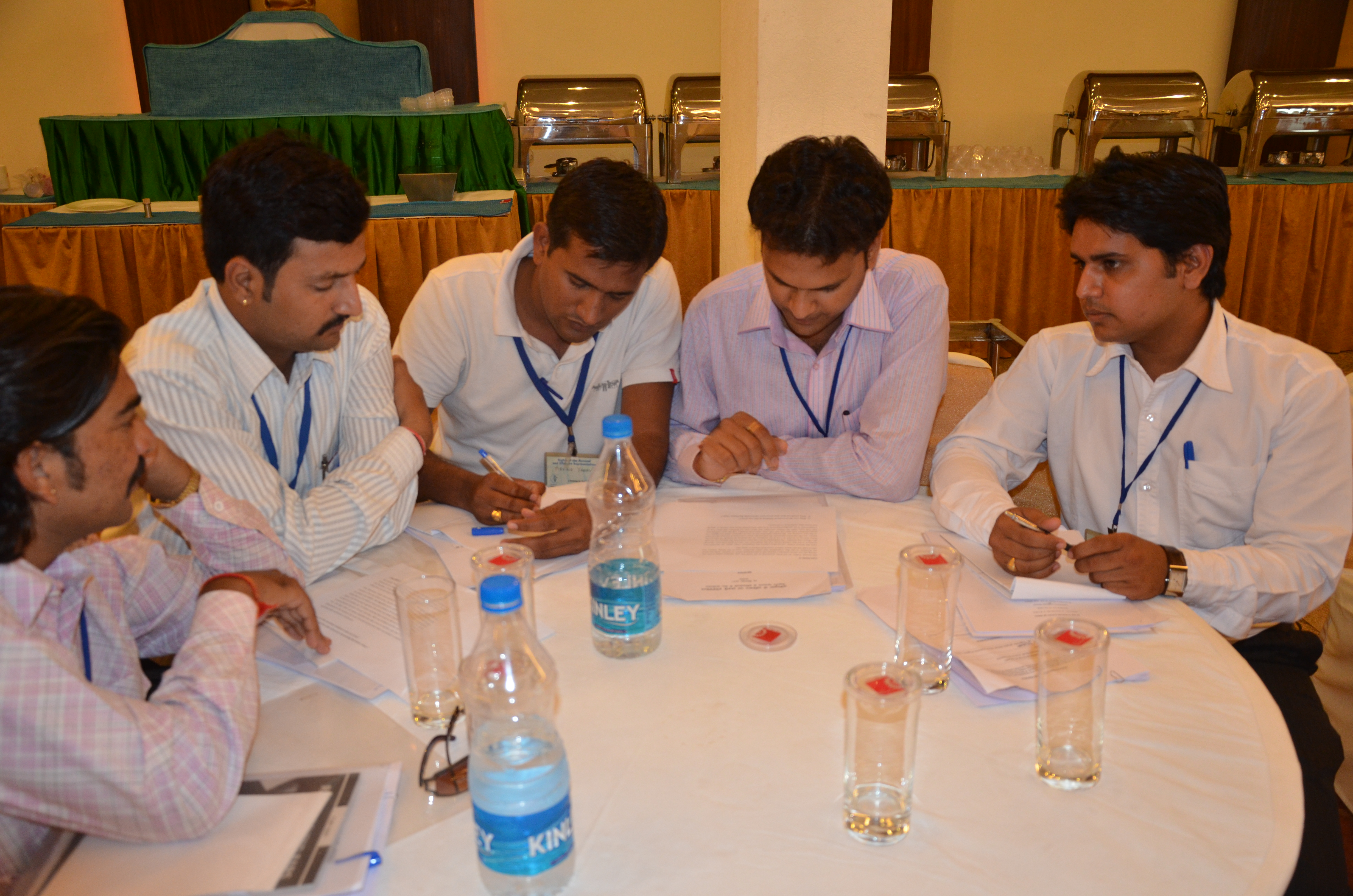
The third session of IBJ’s training programme in Pondicherry India was designed to encourage communication and discussion. The participants were divided into groups of five and asked to identify all the procedural errors they could see in the hypothetical case expertly formulated by trainers Ajay Verma, IBJ Fellow in India and Manohar Raju, San Francisco Public Defender.

Participants identified all the procedural errors they could see, including several innovative ones challenging the mental capacity of the imagined accused. Since all were aware of the judgment in the case of D.K. Basu pinpointing errors such as forced confessions or refusal of legal representation, this came easily to the well prepared participants. As a response to the hypothetical acceptance of the confession given and its effect on the verdict, several participants proposed a series of defenses that could be readily used, and advocated plea bargaining as the future of criminal litigation.

3659757586_97158e8fd71.jpg

Participants in small groups 

When asked to specify the various trends that daily affect their practices as legal aid lawyers, several common problems raised their heads. Lawyers often face hurdles such as non- cooperating investigating agencies, unavailability of First Information Reports, delays in the procedure, lack of sufficient infrastructure and meager pay that can barely sustain a living.

After this, the groups were asked to state the various goals they hoped to achieve during the course of their practice and identify short term plans to help reach their ultimate goal. While a few lawyers wanted to spread legal awareness and knowledge, increase literacy and empower women, others wanted a more impartial judiciary and an incorruptible police force and to help achieve there goals they sought a more active role from the legislature in the form of stricter laws.

To end on a lighter note, participants were asked to describe the defining moment of their career as a lawyer, most of which included winning the first case or their client being granted bail, and a general sense of camaraderie could be observed. The trainers then asked groups of three to draw a picture of what the legal system should look like in 10 years. With several participants taking up crayons for the first time in years, this brought about the training programme to a successful close with groups coming up with imaginative drawings and catchy slogans.

 3659839164_793c295e47_m.jpg 3659840350_5d9187a28e_m.jpg

Particpants share their vision of the legal system in ten years time

3659926668_e872d89d3a.jpg

Mr. K.Uthirapathy, District Judge and Hon’ble Member Secretary of the Pondicherry Legal Service Authority, addresses the group

The day ended with a thank you from the Hon’ble Member Secretary of UTPLSA and the distribution of certificates and group photos.

 3659902960_e4a2c11101.jpg

Participants receive their certificates at the end of the day

[Slashdot] [Digg] [Reddit] [del.icio.us] [Facebook] [Technorati] [Google] [StumbleUpon]

Successful Training Session for Legal Aid Lawyers in Pondicherry, India

Tuesday, June 30th, 2009

On Friday 19th June, IBJ India Fellow Ajay Verma and San Francisco Public defender Manohar Raju, along with the Union Territory of Pondicherry Legal Services Authority, conducted a training session for legal aid lawyers in Pondicherry, India. The day-long training began with a welcome by Ajay Verma highlighting the role of IBJ in providing effective representation to every man, woman and child before the court of law.

3658950309_23e8cd840c.jpg

IBJ India Fellow Ajay Verma introduces the workshop 

The workshop was introduced by Manohar Raju, and began with a video about the use of torture throughout the world. This was followed by an address from Mr. K. Uthirapathy Hon’ble Member Secretary in which he expressed gratitude and hoped that the training would be useful for all members of the bar.

The participating lawyers began by introducing themselves and sharing their expectations for the day, and Session One began with the participants listing some difficulties they faced in criminal defense cases. These included: that facts were not disclosed to the lawyers, unavailability of copies of the case, pressure on counsel as well as judges, lack of infrastructure, stigma being attached to the counsel for the accused, etc.

Session Two began with a clip of the O.J. Simpson trial, to identify effective techniques of criminal defense.

3659757586_97158e8fd7.jpg

Participants discussing the centrality of early access to counsel

This was followed by a discussion on the importance of early access to counsel, as well as the origin of that right. During this discussion questions the pay defenders receive were raised repeatedly. It was generally agreed that a pay increase would lead to better practice.

The focus of the day was the importance of early access to counsel and the client/lawyer relationship, and this session in Pondicherry marks the third criminal defense training session in India.

[Slashdot] [Digg] [Reddit] [del.icio.us] [Facebook] [Technorati] [Google] [StumbleUpon]

IBJ India Conducts Successful Training in Pondicherry

Friday, June 26th, 2009

On Friday, June 19, IBJ India Fellow Ajay Verma and San Francisco Public Defender Manohar Raju teamed up with the Union Territory of Pondicherry Legal Services Authority (UTPLSA) to produce a successful one-day training session in Pondicherry, India. The training focused on the topics of the importance of early access to counsel and the nature of the lawyer/client relationship.

3658951613_57711d621f_m1.jpg 

Over the course of the day, training participants took a practice test to brush up on the fine points of Indian law, developed a legal strategy for defending victims of police torture, and presented their vision of how the criminal justice system could fully protect the rights of accused persons. Among the 45 lawyers present were the President of the Pondicherry Bar Association, a member of the bar council in Tamil Nadu, and the member secretary of the UTPLSA, all of whom expressed their appreciation for the training and urged IBJ to continue with similar events.

3658960561_81fd134fca_m.jpg

The Pondicherry training marks IBJ India’s third criminal defense training session in India, following previous events in West Bengal and New Delhi.

3659866736_4250562cbf_m1.jpg

The President of the Pondicherry Bar Association (seated, left) presents his vision for improving criminal defense in India.


[Slashdot] [Digg] [Reddit] [del.icio.us] [Facebook] [Technorati] [Google] [StumbleUpon]

IBJ Gathers in Geneva Fellows from Burundi, Cambodia, India, Rwanda, and Zimbabwe in June 2009

Tuesday, May 26th, 2009

The idea of gathering IBJ Fellows, the backbone of the organization’s programs, had been forming for quite some time…it is now reality! From June 8th until June 11th, Abhijit Datta (Fellow from West Bengal, India), Ajay Verma (Fellow from New Delhi, India), Astère Muyango (Fellow from Burundi), Bosco Bugingo (Future Fellow from Rwanda), Innocent Maja (Fellow from Zimbabwe) and Ouk Vandeth (Fellow from Cambodia) will spend a week at IBJ’s Headquarters in Geneva sharing experiences, challenges, best practices, discussing their vision of the criminal justice system and tightening the bounds linking them around IBJ’s mission and vision.

We know from our experience that most criminal defense lawyers feel isolated by the challenging work they do. Not only do our fellows restlessly scour their countries’ prisons and courts to identify disempowered accused and make sure their basic legal rights are upheld, but they also courageously lead ambitious country programs, whose success require energy, determination, and talent. It is our duty to arm them with the skills, confidence and support they need to best face the challenges along the road. The Fellow Summit will aim at creating this supportive environment in which they feel listened to, valued and assisted in their mission.

In particular, the fellows will follow an intensive training on a variety of leadership, communication, negotiation, organizational, fundraising, and project management skills that will lead to forming strategies reflecting IBJ’s vision and meeting the specific needs of their countries’ criminal justice system. Team-building exercises and recreational activities will create synergy between fellows and other IBJ staff.

Prior to the summit, the Fellows will be celebrated at IBJ’s First Jubilee for Justice to take place in Bern on June 6th, 2009.

[Slashdot] [Digg] [Reddit] [del.icio.us] [Facebook] [Technorati] [Google] [StumbleUpon]

CLEAR holds a legal education & awareness training in Gwassi, Kenya

Thursday, March 19th, 2009

On a sunny Sunday morning, five members of the CLEAR- Kisumu team set off for Gwassi where they would be conducting a three-day legal education program. The team consisted of the CLEAR-Kisumu Resident Advocate, the CLEAR-Kenya Legal Education coordinator, a Court Clerk, the CLEAR-Kisumu Legal Aid Communications intern and a volunteer.

CLEAR had been invited to Gwassi to hold a training by St. Joseph’s Community Development Group. Gwassi is in the Suba district, where the majority of residents are fishermen who rely on Lake Victoria as their main source of income and food. The legal education program is intended to heighten awareness of legal rights among community members; especially rights pertaining to issues that are relevant to their daily lives. About 60 members of the local community were present, in addition to several representatives from women and youth-focused organizations, and provincial administrators such as village chiefs.

On the first day of the training, attendees were led by the CLEAR team in a roundtable discussion about their expectations with regard to the training and how they hoped to benefit from it. They then broke off into training sessions about specific areas of law, ranging from property rights to human rights. The trainers were sure to encourage discussion and Q&A periods during the sessions; by choosing a participatory mode of instruction, they hoped to ensure that participants understood how the material related to their own lives. The CLEAR team reported that the training had been a large success, and that the men and women who attended felt empowered and excited by their newfound knowledge.

[Slashdot] [Digg] [Reddit] [del.icio.us] [Facebook] [Technorati] [Google] [StumbleUpon]

An update from our Kenyan JusticeMaker fellow, Joy Mdivo

Tuesday, March 17th, 2009

Hey everyone,

I have been pretty busy for a while, hence my silence, but I assure you, I shall try and be more communicative in the future. I have just finished a tour of all CLEAR projects in Kenya, which is very insightful as to how much people can do with so very little. We missed out on some USAID funding, and when I did some follow-up to find out why we did, I was informed that the amount we asked for, and the work we said we would do with it did not match. It was too much work for too little money!! Since we are a largely volunteer based organisation, we do get to do a lot of work for very little money. Our staff earn Kenyan salaries, not typical NGO salaries. However, next time if what they want is a bloated budget to believe that we can do the work, I am sure I can add a few zeros to my request!

The work is going on great. This week is the Judiciary open day, supposed to demystify the legal process to the general members of the public. CLEAR is participating by putting up a desk at Mombasa, Kisumu and Eldoret Open Day. Nairobi is the capital and is super competitive, CLEAR was not invited to participate here. We are happy to chip in where we can.

CLEAR Kisumu has finally taken off! The first paralegals are being trained this week in an area called Gwassi. We finally got our digital camera, so pictures should be up soon. We have managed to catch up with our programme work, so hopefully the delay of the start will not alter our goals. The team is very motivated, and I am sure we shall get the best from them. They return from Gwassi on Wednesday in time to prepare for the Judiciary open day, scheduled for Friday the 20th.

Enough from me for now, do take care and God bless you all.

Joy Mdivo 

[Slashdot] [Digg] [Reddit] [del.icio.us] [Facebook] [Technorati] [Google] [StumbleUpon]

The Swazi JusticeMakers team experience setbacks

Monday, March 9th, 2009

Buhle’s team recently visited the Kaphunga Village area to train community police. They were taught about private arrest, admissibility of evidence, presumption of innocence and the Swazi judicial system. They were given a warm welcome by the local chief, who expressed his appreciation for their efforts to educate his people on matters of such importance. He even invited them back to conduct a workshop with the inner council members.buhle_team.jpg

Buhle and his team, from right: Alfred, Sibusiso, Gugu, Buhle, Phakama and Tengetile

Despite this success, Buhle’s team has experienced some setbacks. They had scheduled a workshop on Monday, February 21st at the town of Big Bend, but it was suddenly cancelled without explanation. They managed to reschedule for the beginning of March, only to find that they had been cancelled yet again. One of Buhle’s contacts named Sabelo – who works with a grassroots youth empowerment organization in Big Bend – went to investigate the situation. From what he could gather, it seems that the problem with the team’s involvement stems from the local leadership. He was questioned by community leaders, who appeared very cautious and suspicious about his intentions, but eventually referred him to the Sphofaneni police station. While the station commander was agreeable enough, Sabelo was accused by some of the other officers of overstepping his bounds and prying into matters that do not concern him. They asserted that the trainings on human rights would not be good for the people, and they would not receive permission to hold them there.

A further setback includes the failure of State Police to grant Buhle and his team access to train the troops; however they are still in negotiations and hope to come to an agreement soon.

Swaziland operates under a dual legal system. in which only the most serious cases are tried by Magistrates courts. Those who are left to be tried before Customary courts are legally mandated to face the judge without the benefit of legal representation or the presentation of evidence in their favor. Buhle’s JusticeMakers team attended a Customary court session and introduced themselves to the court orderly, who also happened to be a police offer. She put them in contact with the police station commander, who was intrigued as to why they were interested in the Customary court as opposed to the Magistrates court, but ultimately welcomed them and gave them the go ahead to proceed with their mission in the jail.

[Slashdot] [Digg] [Reddit] [del.icio.us] [Facebook] [Technorati] [Google] [StumbleUpon]

Swazi JusticeMaker trains police officials on human rights

Tuesday, February 17th, 2009

Buhle’s team has reported a successful start to their project, having carried out two workshops educating community police on human rights. The first session was in the Mbhuleni township, where in the past local police have shown a tendency towards violence. The team discovered that although the police were aware of the concept of human rights, they had not been informed on what those rights entail.

A later session with the community police at Nu Village revealed that they not only think that the use of abuse and torture is acceptable, but that they, “really believe in the beatings”. They trained these officers on human rights legislation relevant to their jobs, for example the laws surrounding conducting a search and carrying out an arrest. At the request of the officers at Nu Village, the team have decided to compile a module on human rights legislation that they can distribute to these police officers and that can be used in future sessions.

In addition to beginning the workshops, Buhle’s team are well on their way to securing legal aid for prisoners who have been the subject of abuse and torture. They have succeeded in securing the help of two law firms that have agreed to provide pro-bono legal aid for two of these cases so that they can be transferred from the Customary courts to the Magistrates courts. Congratulations Buhle!

[Slashdot] [Digg] [Reddit] [del.icio.us] [Facebook] [Technorati] [Google] [StumbleUpon]