Posts Tagged ‘Police’

Interview with Bembem; A portrait of the Accused in Brazil

Wednesday, July 29th, 2009

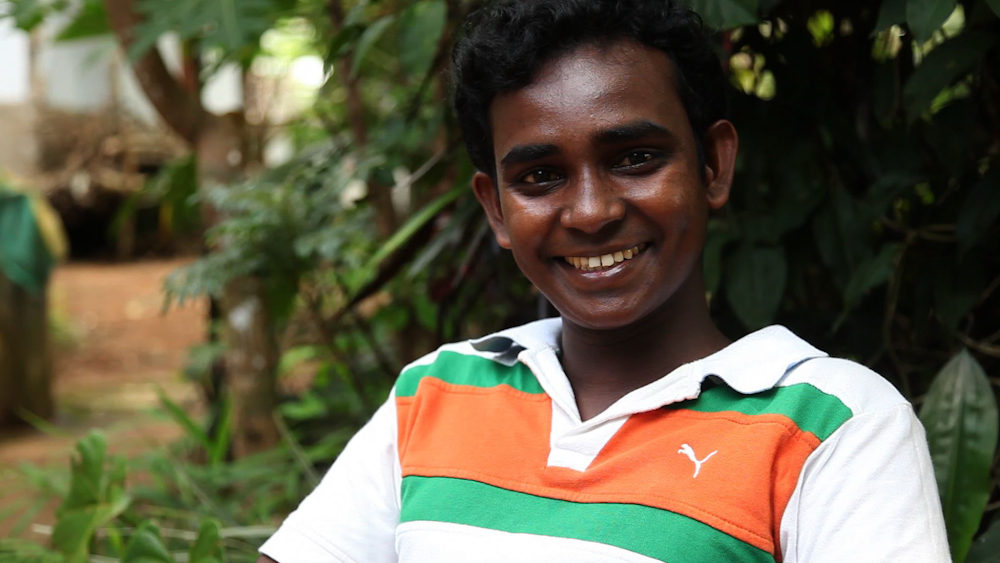
I needed money. A drug dealer wanted me to teach his dog how to bite. He paid me in cash. And so I did it. But the dog didn’t want to learn, it was hard work, but I taught the dog. One day the police came in searching for drugs. He’d stashed 50 kilos of weed in the dog’s house. I had to hope the dogs would bite.

- Bembem

ferng-bembem0002.jpg

(Photo by Michelle Ferng)

The police officers were too preoccupied with the dogs. They did not find the drugs. Bembem was allowed to walk out of the house with his life. Bembem is an older man who has been incarcerated so many times he lost count. He told his story of growing up in Brazil’s prison system:

“It doesn’t matter if you are in prison for one day, one week or one month, you are there one moment and you are part of the system for life.

(more…)

LRF-Organized Lecture: Pakastani Public Prosecutor Abdul Maroof

Monday, July 6th, 2009

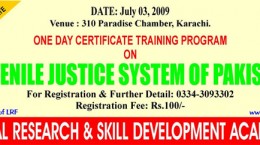
The past few weeks, Legal Rights Form has advertised excitedly about their Juvenile Rights Training Forum, and the day finally came. The key speaker was Mr. Abdul Maroof, Public Prosecutor and former Assistant Inspector General of the prisons of Sindh (Karachi province, Pakistan).

pakistan_training_060709.jpg

I thought I was going to be late because my rickshaw ride to Paradise Chambers (LRF office) took me to Paradise Center (NOT nearby). After a hustle, I arrived in the conference room to recall that punctuality is not the norm here. A couple hours later, after Javed and Safi, LRF members, opened the discussion of juvenile rights with an introduction of the Juvenile Justice System Ordinance (JJSO), Mr. Maroof arrived. Late but not to disappoint!

Mr. Maroof settled into the head desk chair of the conference room of twelve eager listeners (11 Sindh-practicing lawyers and myself). With a sip of water and a click into English mode, he jumped into a well-organized and passionate lecture even before the office-help returned with the tea and sweets! The topic was juvenile rights in Pakistan: what is lacking and who is responsible. Thus he divided his lecture nicely into sections of responsibility: Police, Judge and Prison Officials. The final discussion period even turned out to be an informal Citizen or Lawyer Responsibility section.

The police are responsible to inform both the parents and a probation officer immediately upon custody of the child. Currently, police are not making the effort to inform parents, and there are only 3 probation officers in all of Sindh (See US State Department Human Rights Report 2008). Children do not get the attention they deserve but rather sit in jail unnoticed. Police do not generally even request bone ossification tests to determine the age of a youth. “A child is a child ONE DAY before his 18th birthday!” Mr. Maroof emphasizes.

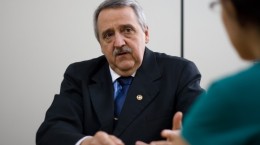
maroof 2

Mr. Maroof continues banging his hand on the desk when he discusses the importance of maintaining a child’s dignity, from arrest through the court process. Children are NOT to be handcuffed, NOT to be interrogated by officers in uniform, NOT to be judged by elevated judges in gowns and NOT to face the presence of the general public or media in court! Even in jail, children should not be ordered around by officers in uniform; they should have dedicated class schedules, should not live behind bars, and they should have access to both medical doctors and psychologists.

“Last night, as I left dinner to head back to the office, my son asked me when I would come home. I saw tears in his eyes when I said I would be late. I ask you now: if my son is upset to be detached from his father on a regular evening, JUST IMAGINE the mental state of these CHILDREN who have been torn away from home, sometimes without ANY contact to their parents. THIS IS A LOSS OF CHANCE!”

Mahroof

I am moved to hear a prosecutor speak with such compassion for the accused. Mr. Maroof says we must begin with education: training of police, judges, prison guards, more probation officers. He says Sindh’s Social Welfare Department must be more involved, rather than just the Home Department, in getting funds. I asked whether he sees hope in getting young attorneys (like the present group) connected to other well-intentioned more powerful people (like those running government-run legal aid programs) to cooperate in pressuring for government action. His eyes light up: “Yes! Of course! They can and will. I have a recommendation: please go approach the Home Secretary and ask to be a non-official representative to visit the prisons.” He says people have the right to request to see the prisons, but people do not request to do so. Giving attention is a step in the right direction.

Mr. Maroof seems delighted to see the interest of this young group, and I, myself, left with a curious smile. Throughout my time in Pakistan, I’ve worked both with people who have power to get governmental support as well as young lawyers who may be less-powerful but are seriously passionate. I feel that uniting these groups is the best chance for progress. And Mr. Maroof’s lecture, by one who works with the stronger side, reaching out to the younger group, symbolized a spark in the connection I’d been hoping for.

[Slashdot] [Digg] [Reddit] [del.icio.us] [Facebook] [Technorati] [Google] [StumbleUpon]

Karachi Police Station Visits

Friday, July 3rd, 2009

Legal Rights Forum arranged to visit a few police stations in Karachi today.  Two car-fulls of attorneys and I pull up to the Artillery Maidan Police Station in one of the high security areas in Karachi.  We are greeted in an air-conditioned room that feels like it’s stamping the cigarette-smoke smell into your clothes.  An officer seems happy to answer our questions.  LRF is concerned about the techniques of the investigation officers as well as the force’s awareness of the 2000 Juvenile Justice System Ordinance (JJSO) which provides that juveniles should be treated differently than adults.  Juveniles are not supposed to be hand-cuffed (unless the crime is heinous), they are not to be kept behind bars, and the ordinance provides strict rules about getting in contact with parents. 

Of the few officers in the room, none of them have received any special instruction as to the JJSO.  Only one knew it existed, and he took us to a dusty framed poster on the wall of the interior of the station that had some juvenile rights outlined.  It was made and provided by an NGO called “Advocate,” but it was outdated and not payed attention to. 

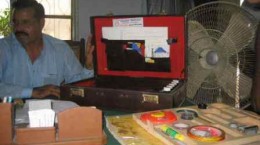
We then went into another room where another officer brought us the “tool kit” of the investigation officers.  He said proudly, “The officers have this kit with each time they make a single investigation.” 

 toolkit1_030709.jpg

I looked for jars of glitter because I thought I’d seen this kit before in my kindergarten class on craft day.  I can’t imagine these glue sticks, plastic gloves and scotch-tape fingerprint set are the most reliable of methods on which a person’s freedom should rely.  The officer continues, “We do not use unfair methods to get confessions, only psychological methods…”  What does that mean?  Psychological methods?  I ask: is there a science to these psychological methods?  He says (as I understand through what was translated back to me), “Of course, medical students are trained in this.”  Javed, a friend of LRF who is with us on the visit says to me, “Sounds like not,” with an unfortunate smile.

toolkit2_030709.jpg

At the next police station, the Boat Basin and Clifton area station, we are greeted in another stale but cool room.  The officers here have the same lack of awareness as to the juvenile ordinance and nonchalant attitude about answering our questions.  They seem to understand that their responses are inadaquate, but don’t seem to feel responsible.  Here, as the officers realize the practices are not up to code, they admit suboptimal performance and cite lack of budget.  They simply don’t have the budget to get continuous training, they don’t have any information in their syllabus on the juvenile code, and they all admit their salaries are insufficient.  Javed looks at me during the salary discussion as a cue because I’d been asking the previous week about officers accepting bribes. 

Another try at questioning the psychological tricks method: what are the psychological tricks?  An officer responds, “We look to see if the accused is jittery or anxious, sweating…”  Javed says, “Did you have any training in this?”  The guy directly says, “No, none at all.”  I was surprised that he seemed to know that that question ended it.  He didn’t even try to pretend he had some superior intellectual ability to judge guilt.

Safi of LRF hands over the framed posters citing several key sections of the Juvenile Justice System Ordinance, which the stations agree to post.  LRF, in its visits to each police station, also requests for the officers to fill out a simple questionnaire on the juvenile rights.  Tahir is compiling summaries of these questionnaires to draw attention to the lack of awareness in the police stations.

[Slashdot] [Digg] [Reddit] [del.icio.us] [Facebook] [Technorati] [Google] [StumbleUpon]

Torture and police abuse take front stage during workshops with Swazi police

Tuesday, June 30th, 2009

During workshops Buhle Dube and his JusticeMakers team held last weekend complaints from community police uncovered incidents of mob justice and torture. The team was in southern Swaziland at the villages of Matsanjeni in Lavumisa and Ngelane in Mazombizwe where incidents of prisoner abuse had been reported in the Times of Swaziland on 10 September 2007.

062709_loomis_ws2_toned_01.jpg

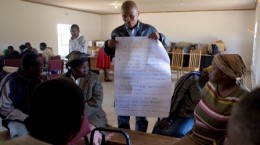
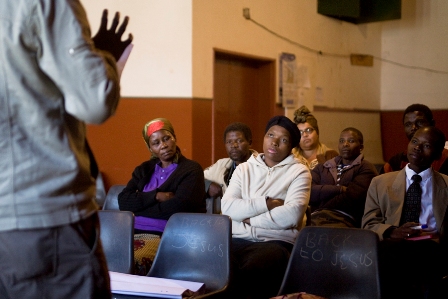
Above: JusticeMakers intern Sibusiso Nhlabaisi gives instructions for an exercise to a breakout group of volunteer community police officers during a workshop on prisoners’ rights and minimal force in the village of Matsanjeni in southern Swaziland on Saturday, June 27. (Photo by Nicholas Loomis)

062709_loomis_ws2_toned_05.jpg

Above: JusticeMaker Buhle Dube, a law professor at the University of Swaziland, speaks to a group of volunteer police officers in the village of Matsanjeni in southern Swaziland during a workshop on prisoners’ rights and using minimal force on Saturday, June 27. (Photo by Nicholas Loomis)

The first workshop was at Matsanjeni where MP Qedusizi Ndlovu arranged a meeting with representatives of the local chiefs and around 30 community police.

Mr. Qedusizi acknowledged the reported incidents as cause for the workshop.

“What happened was that a young guy stole a chicken and when they pounced on him maybe he resisted arrest but being not trained they used excessive force and the person died.”

Refuting the claims, community police blamed a splinter group, which, they claimed, had killed four suspects in mob style punishments.

Clarifying the confusion one community policeman explained the situation.

“We do torture but we do not kill. Four people have been killed by members of the community who claim to be police,” he said.

062709_loomis_ws2_toned_04.jpg

Above: A group representative presents a list of challenges facing the police in the village of Matsanjeni during a JusticeMakers workshop in the village on Saturday, June 27. (Photo by Nicholas Loomis)

In Ngelane, minutes away from the border with South Africa, the high crime rate has led some residents to desperation.

Community police have been arrested for abuse but policeman Mhlanga Simon insisted extreme measures were necessary.

“We’ve decided that if we find you stealing our cattle we’ll kill you,” he said.

062809_loomis_ws3_toned02.jpg

Above: JusticeMakers grant winner and University of Swaziland law professor Buhle Dube speaks to a group of volunteer community police officers on the use of minimal force in detaining and questioning suspects in the village of Ngelane on Sunday, June 28. (Photo by Nicholas Loomis)

Poor co-operation with state police and the perceived inadequacy of the law to protect the community were also cited as reasons for the use of torture. Samson Mdluli the chief of police in Ngelane confirmed some of this.

“The community police arrest these criminals and bring them to the state police but the state police does not call the community police to come and give evidence,” he said through a translator.

The breakdown in communication has forced community police to take the law into their own hands Mr. Mdluli continued.

“That has led to the community police having no confidence in the state police and that has led us to say what is the use of arresting a criminal who is going to be free tomorrow so let us just thrash them. Even though we appreciate that is wrong but that is the only way to ease our vengeance against the crime,” he said.

Dube promptly stepped in to clarify when police could use force.

“If you apply maximum force you are wrong and against the law. No force can be used to punish but it can be used to arrest a dangerous subject. Only the courts can punish,” he said during the discussions.

062809_loomis_ws3_toned05.jpg

Above: JusticeMakers intern and University of Swaziland law student Gugu Simelane, right, addresses the challenges faced by the community police officers of Ngelane, Swaziland during a workshop in the village on Sunday, June 28. (Photo by Nicholas Loomis)

The JusticeMakers, accompanied by Bayo Akinade, special counsel to Advocates International, of Pretoria held discussions with both communities and law students from the University of Swaziland gave presentations on the Swazi court system and constitution including the concepts of bail presumption of innocence and how to use the minimum necessary force.

Robert Mkhatjwa, the head of community police at Matsanjeni, claimed the workshop helped educate the community police.
“It has equipped us with the necessary knowledge as far as apprehending a suspect is concerned.

“For now we’ll be very cautious as we are apprehending suspects because we know the grounds and we know the law now thanks to JusticeMakers,” he said through a translator.

062809_gunning_ws3_toned01.jpg

Above: JusticeMakers grant winner and University of Swaziland law professor Buhle Dube speaks to a group of community police officers in the village of Ngelane in Southern Swaziland on Sunday, June 28. (Photo by Walker Gunning.)

[Slashdot] [Digg] [Reddit] [del.icio.us] [Facebook] [Technorati] [Google] [StumbleUpon]

Swazi JusticeMaker shares achievements and difficulties with local lawyers

Monday, June 29th, 2009

This past Friday 2008 JusticeMakers Fellow Buhle Dube held an event at local restaurant Quatermain’s with Swazi and international lawyers. Buhle hoped to spread word of the successes and challenges he and his volunteer team have encountered fighting torture and prisoner abuse.

jmdinner2.jpg

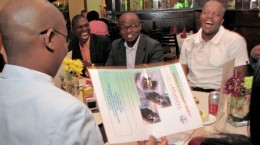
Above: Background from left, JusticeMakers intern Phakama Shili, Ndumiso Mthethwa and Clement Dlamini laugh while speaking with JusticeMakers team leader Bhule Dube, far left, during a dinner on Friday, June 26 at Quatermain’s outside Lobamba, Swaziland. (Photo by Nicholas Loomis)

Addressing those assembled Buhle summarized the JusticeMakers’ work.

“So far we have been around Swaziland. We have held ten workshops and trained more than 300 community police in places like New Village and places like Lavumisa and places like Nhlangano.” Buhle said.

Attending the function were several lawyers from Swaziland and Bayo Akinlade, special counsel for Advocates International , out of Pretoria.

jmdinner3.jpg

Above: JusticeMakers Fellow Buhle Dube, seated next to his wife, Audile, speaks to a group of lawyers and students during a dinner event to raise awareness and support for the team’s mission at Quatermain’s outside Lobamba, Swaziland.  (Photo by Nicholas Loomis)

Ndumiso Mthetwe, a specialist in labour law, was shocked when Dube explained the situation on the ground.

“When I look at these pictures and listen to this speech for a moment I wasn’t sure that this was happening here or in Darfur because surely these suggest horrendous acts of abuse,” he said.

Nevertheless Buhle noted the work, while in its early stages, has already made a difference.

“You may ask the question has there been change? It’s too early to tell but it could be that the little work we have done, talking to community police, has really had an impact. It could be that they have changed their methods of handling suspects,” Buhle said
Expressing his support for Buhle, Ndumiso predicted great success for the program.

“I believe that if such a thing can get publicity and coverage then it can go a long way to really informing people about their rights. We have people in our societies that are not conscious of their rights,” he said.

jmdinner4.jpg

Above: Buhle Dube, right, leans over to speak with fellow attorney Knowledge Manana during a dinner event to raise awareness and support for the JusticeMakers’ mission at Quatermain’s outside Lobamba, Swaziland.  (Photo by Nicholas Loomis)

Buhle also discussed what was next for the JusticeMakers.

“Tomorrow morning we are heading down South to Lavumisa and on Sunday to Nhlangano. Working on the same project as well,” he said.

For Buhle and his team the work continues.

[Slashdot] [Digg] [Reddit] [del.icio.us] [Facebook] [Technorati] [Google] [StumbleUpon]

Swazi JusticeMakers Run Workshop with Community Police on Prisoner Abuse

Saturday, June 13th, 2009

On a cold Saturday morning Buhle Dube and the rest of the Swaziland Justice Makers team journey to Ngwenya to lead a workshop on prisoners’ rights and the legal system for community police. A rural area famous for its glasswork, Ngwenya lies just short of the border with South Africa and has a high crime rate, especially theft.

buhle_speaks.jpg

Above: Bhule Dube, left, speaks to a group assembled at a church in Ngwenya, Swaziland as Alfred Magagula, right, looks on during a workshop on prisoners’ rights and abuse on Saturday, June 13.  (Photo by Nicholas Loomis)

In conjunction with the Municipal authorities Buhle, three of his students, Sibusiso Nhlabaisi, Ngeti Dube, Gugu Simelane and Alfred Magagula, his second-in-command, came as part of a series of workshops designed to teach the, often untrained, community police aspects of the law and how to conduct a proper arrest.

Hot tea and sandwiches were passed out as the police prepared presentations on their duties and challenges. The Justice Makers let Benjamin, the municipal liaison, lead the first half of the session before Alfred stepped up to field questions.

swazi_participants.jpg

Above: A group consisting of villagers, police officers and government officials listens during a workshop on prisoners’ rights and abuse conducted by Justice Makers in Ngwenya, Swaziland on June 13.  (Photo by Nicholas Loomis)

While the audience was engaged and frequently shared laughs with the JusticeMakers they were reluctant to confront the issue of prisoner abuse. Finally Buhle stepped in to break the tension a task he has become familiar with.

“In rural communities they do not admit to torture. So we tell them look we have been around the country we know the only way to arrest an armed suspect is to beat them up. Then they say, ‘Yes, O.K. we beat them up.’”

Afterwards Buhle’s students gave presentations on the use of minimal force, presumption of innocence, and the court system, which elicited an enthusiastic response. Bhekie Dlamini, the head of the community police’s secretary, summarized the speeches’ reception.

“They were so inspirational. We had to ask questions and we got information and I think which we are going to take back to our community.”

alfred_speaking.jpg

Above: Alfred Magagula, top, works with a small group of police officers during a breakaway session at the workshop conducted by the Justice Makers team in Ngwenya, Swaziland on Saturday, June 13. (Photo by Nicholas Loomis)

Nor did the accolades end there. Also present was Ms. Barbosa, head of the Crime Prevention Unit for the Hhohho region. She described the session as a partnership workshop that identified a gap in training.

“You could just tell some of them were totally ignorant of how the law operates there’s still the normal people who haven’t been trained on anything on the law and how they should actually treat the suspects and go about cases. And so we’ll be conducting a brief workshop for those that haven’t been trained.”

[Slashdot] [Digg] [Reddit] [del.icio.us] [Facebook] [Technorati] [Google] [StumbleUpon]