Posts Tagged ‘India’

Commemorations of the 61th Anniversary of the Universal Declaration of Human Rights in IBJ’s country programs

Wednesday, December 9th, 2009

The 10th of December is a day of remembrance, remembrance of the victims of human rights abuses. It is also a day to pay tribute to those who have stand up for their rights. Finally the 10th of December is a day of celebration; celebration of all the progress that has been made and celebration of what needs to be accomplished to achieve Rule of Law in every corner of the globe.

On this special occasion, IBJ intends to remind international, national and local communities of its particular approach to human rights - protecting the legal rights of the people who become victims of unchecked justice systems - and renew its commitment to fair justice systems through a series of consciousness-raising activities across its country programs.

IBJ West Bengal Fellow Abhijit Datta is embarking its organization, MASUM (Banglar Manabadhikar Suraksha Mancha), in a large human rights fair that will be held this coming Thursday at the vicinity of Academy of Fine Arts of Kolkata. Abhijit rallied support from other grassroots civil rights and human rights organizations. Together, they will coordinate exciting awareness-raising activities: an art exhibition will depict pictures of human rights violations; booklets, publications and other materials informing citizens of their legal rights will be widely distributed; public orations - including testimonies of victims of abuses - will be organized throughout the day. Big awareness-raising banners will be displayed at strategic places at the Indo-Bangladesh border, where minority tribes are particularly vulnerable to human rights violations.

img_5072-kids_banner_resized.jpg

Above: Burundian kids hold a poster reading “Burundi moves forward against torture” during the 26th of June rights awareness campaign in Bujumbura (Photo by Nathalie Mohadjer)

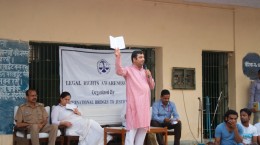
Abhijit’s efforts will be echoed by Astère’s, IBJ Burundi Fellow. IBJ Burundi team left yesterday for the North-West province of Cibitoke where a street law campaign will be conducted. The team will be dispatched at strategic places of the city and will engage the local population in constructive discussions about their rights and responsibilities within the justice system. Men, women and children will be put in the situation of being arrested for a petty crime and asked what they think their legal rights are. Eventually, an engaging poster and memo card about their rights at time of arrest will be handed out to them. A round table discussion on alternative sanctions to imprisonment will be conducted the day after. The platform will unite legal practitioners with magistrates, prosecutors, police officers and prison officials and put them on a path towards reforming the justice system.

A similar on-street canvassing advisement of rights campaign will be organized in Cambodia, where IBJ Fellow Ouk Vandeth and the rest of the team will capitalize on the 25 campaigns held throughout 2009 to make sure local population are best approached, engaged and educated about their legal rights in case of arrest.

[Slashdot] [Digg] [Reddit] [del.icio.us] [Facebook] [Technorati] [Google] [StumbleUpon]

Pondicherry Training Focuses on Current Challenges and Hopes for the Future

Tuesday, June 30th, 2009

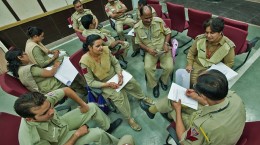
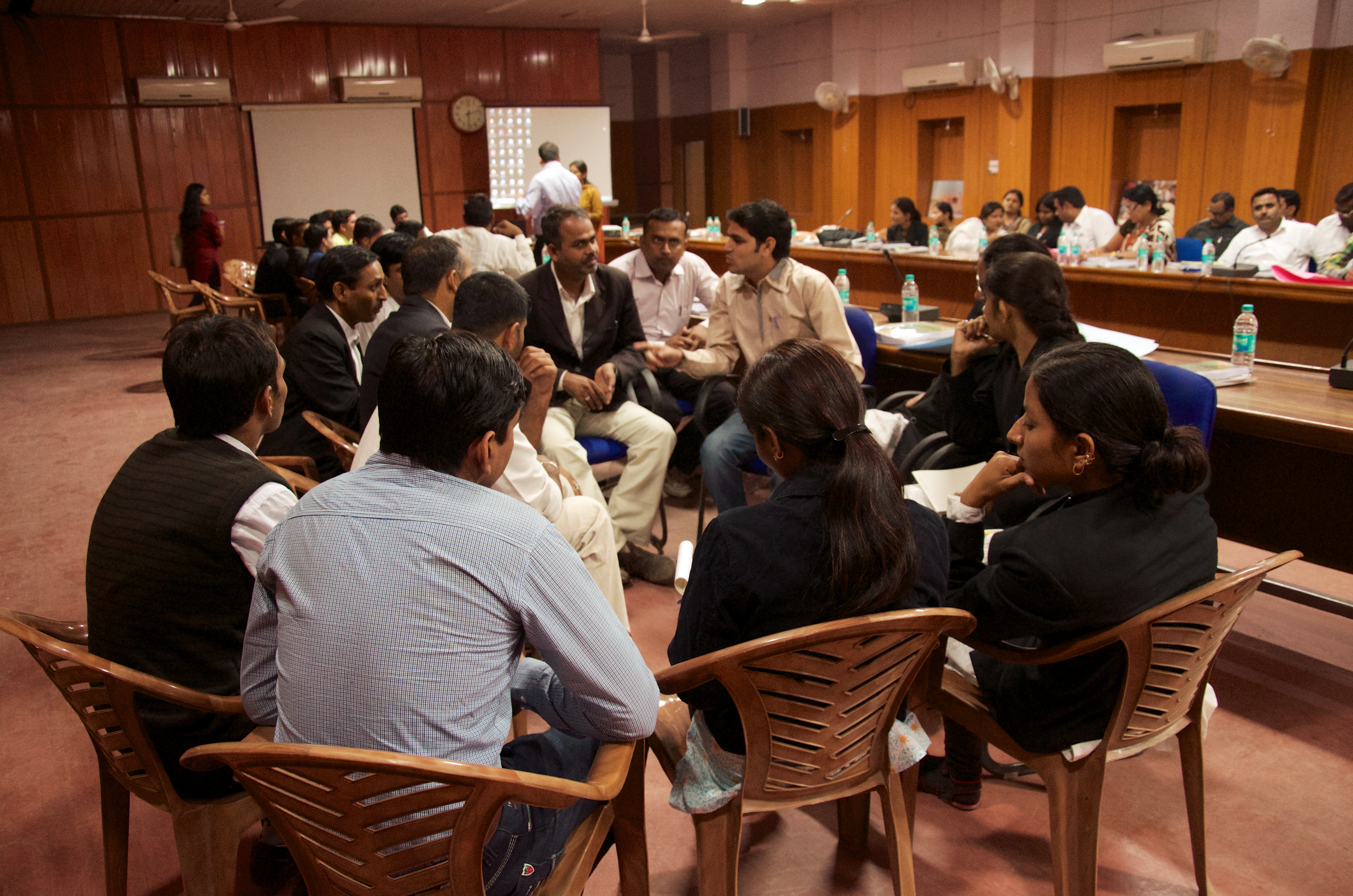
The third session of IBJ’s training programme in Pondicherry India was designed to encourage communication and discussion. The participants were divided into groups of five and asked to identify all the procedural errors they could see in the hypothetical case expertly formulated by trainers Ajay Verma, IBJ Fellow in India and Manohar Raju, San Francisco Public Defender.

Participants identified all the procedural errors they could see, including several innovative ones challenging the mental capacity of the imagined accused. Since all were aware of the judgment in the case of D.K. Basu pinpointing errors such as forced confessions or refusal of legal representation, this came easily to the well prepared participants. As a response to the hypothetical acceptance of the confession given and its effect on the verdict, several participants proposed a series of defenses that could be readily used, and advocated plea bargaining as the future of criminal litigation.

3659757586_97158e8fd71.jpg

Participants in small groups 

When asked to specify the various trends that daily affect their practices as legal aid lawyers, several common problems raised their heads. Lawyers often face hurdles such as non- cooperating investigating agencies, unavailability of First Information Reports, delays in the procedure, lack of sufficient infrastructure and meager pay that can barely sustain a living.

After this, the groups were asked to state the various goals they hoped to achieve during the course of their practice and identify short term plans to help reach their ultimate goal. While a few lawyers wanted to spread legal awareness and knowledge, increase literacy and empower women, others wanted a more impartial judiciary and an incorruptible police force and to help achieve there goals they sought a more active role from the legislature in the form of stricter laws.

To end on a lighter note, participants were asked to describe the defining moment of their career as a lawyer, most of which included winning the first case or their client being granted bail, and a general sense of camaraderie could be observed. The trainers then asked groups of three to draw a picture of what the legal system should look like in 10 years. With several participants taking up crayons for the first time in years, this brought about the training programme to a successful close with groups coming up with imaginative drawings and catchy slogans.

 3659839164_793c295e47_m.jpg 3659840350_5d9187a28e_m.jpg

Particpants share their vision of the legal system in ten years time

3659926668_e872d89d3a.jpg

Mr. K.Uthirapathy, District Judge and Hon’ble Member Secretary of the Pondicherry Legal Service Authority, addresses the group

The day ended with a thank you from the Hon’ble Member Secretary of UTPLSA and the distribution of certificates and group photos.

 3659902960_e4a2c11101.jpg

Participants receive their certificates at the end of the day

[Slashdot] [Digg] [Reddit] [del.icio.us] [Facebook] [Technorati] [Google] [StumbleUpon]

Successful Training Session for Legal Aid Lawyers in Pondicherry, India

Tuesday, June 30th, 2009

On Friday 19th June, IBJ India Fellow Ajay Verma and San Francisco Public defender Manohar Raju, along with the Union Territory of Pondicherry Legal Services Authority, conducted a training session for legal aid lawyers in Pondicherry, India. The day-long training began with a welcome by Ajay Verma highlighting the role of IBJ in providing effective representation to every man, woman and child before the court of law.

3658950309_23e8cd840c.jpg

IBJ India Fellow Ajay Verma introduces the workshop 

The workshop was introduced by Manohar Raju, and began with a video about the use of torture throughout the world. This was followed by an address from Mr. K. Uthirapathy Hon’ble Member Secretary in which he expressed gratitude and hoped that the training would be useful for all members of the bar.

The participating lawyers began by introducing themselves and sharing their expectations for the day, and Session One began with the participants listing some difficulties they faced in criminal defense cases. These included: that facts were not disclosed to the lawyers, unavailability of copies of the case, pressure on counsel as well as judges, lack of infrastructure, stigma being attached to the counsel for the accused, etc.

Session Two began with a clip of the O.J. Simpson trial, to identify effective techniques of criminal defense.

3659757586_97158e8fd7.jpg

Participants discussing the centrality of early access to counsel

This was followed by a discussion on the importance of early access to counsel, as well as the origin of that right. During this discussion questions the pay defenders receive were raised repeatedly. It was generally agreed that a pay increase would lead to better practice.

The focus of the day was the importance of early access to counsel and the client/lawyer relationship, and this session in Pondicherry marks the third criminal defense training session in India.

[Slashdot] [Digg] [Reddit] [del.icio.us] [Facebook] [Technorati] [Google] [StumbleUpon]

IBJ India Conducts Successful Training in Pondicherry

Friday, June 26th, 2009

On Friday, June 19, IBJ India Fellow Ajay Verma and San Francisco Public Defender Manohar Raju teamed up with the Union Territory of Pondicherry Legal Services Authority (UTPLSA) to produce a successful one-day training session in Pondicherry, India. The training focused on the topics of the importance of early access to counsel and the nature of the lawyer/client relationship.

3658951613_57711d621f_m1.jpg 

Over the course of the day, training participants took a practice test to brush up on the fine points of Indian law, developed a legal strategy for defending victims of police torture, and presented their vision of how the criminal justice system could fully protect the rights of accused persons. Among the 45 lawyers present were the President of the Pondicherry Bar Association, a member of the bar council in Tamil Nadu, and the member secretary of the UTPLSA, all of whom expressed their appreciation for the training and urged IBJ to continue with similar events.

3658960561_81fd134fca_m.jpg

The Pondicherry training marks IBJ India’s third criminal defense training session in India, following previous events in West Bengal and New Delhi.

3659866736_4250562cbf_m1.jpg

The President of the Pondicherry Bar Association (seated, left) presents his vision for improving criminal defense in India.


[Slashdot] [Digg] [Reddit] [del.icio.us] [Facebook] [Technorati] [Google] [StumbleUpon]

First Annual Fellow’s Summit wraps up with messages of unity and hope

Friday, June 12th, 2009

The morning began with a session of qigong, hosted by Heim Center curator Eduardo Von Fellenberg, to focus and direct the fellows on the last day of the Summit. Much of the day was intended to aid the fellows in learning about the logistical aspects of IBJ, namely country evaluation, monitoring reports, and the importance of keeping accurate accounting records to secure long-term funders. Before heading off the International Red Cross Museum and the United Nations to celebrate the end of the summit and see some of the sights of Geneva, the Summit closed with a final feedback and brainstorming session, addressing both the challenges faced going forward and the lessons learned from the week.The common thread was the challenge faced by securing sufficient amounts of funds for criminal defense projects in each of the fellow’s countries. Picking up on the tools learned in the fundraising session, led by Pam Calhoun earlier in the week, Rwandan fellow John Bosco Bugingo brainstormed ideas on how to locally fundraise, suggesting the possibility of holding a ‘Give a Dollar for Justice’ radio spot on the local radio programs, whereby the majority of citizens in Rwanda will learn the message of IBJ and give. Burundian fellow Astère Muyango liked this idea, highlighting the importance of the radio in both fundraising and getting out the message of legal rights.The last fellow to speak was Ajay Verma, who commented on his pride in creating a ‘fellow task force,’ comprised of the six fellows present at the Summit this week.  Because of this week, Verma noted, the fellows were able to appreciate and fully understand the challenges, both alike and dissimilar amongst, of their colleagues around the world. With wide support, Verma suggested that the fellows act as a global support group to one another, continuing to be in touch with one another to discuss problems or challenges faced as they soldier on in the name of criminal justice.Fellows and Staff on the Last Day of the Summit(Staff and Fellows listen intently to presentations on the last day of the First Annual Fellows Summit held in Geneva)

[Slashdot] [Digg] [Reddit] [del.icio.us] [Facebook] [Technorati] [Google] [StumbleUpon]

Fellows Summit Continues: From Comparative Criminal Law to Collective Vocalization

Thursday, June 11th, 2009

Most lawyers would consider themselves lucky to hear the experiences of practiced defense attorneys in their own countries. Few, then, ever imagine that they might be able to spend a week learning with skilled defenders from five different countries. This week, IBJ’s “Fellows“-criminal defense attorneys who are spearheading IBJ’s programs- have come together from Zimbabwe, Rwanda, Burundi, Cambodia, and India for the first-ever “Fellows Summit” at Fondation Heim in Chambésy, Switzerland, to share the wisdom drawn from their diverse international experiences.

The Fellows immediately dove into the critical issues of criminal justice in their countries. During Monday’s opening session, the Fellows took turns introducing each other to the governing rules of criminal procedure in their countries. Almost immediately after Cambodia Fellow Ouk Vandeth began his summary, the other Fellows responded eagerly with questions about the procedural protections available to Cambodian defendants. The Fellows left no stone unturned with questions ranging from the right of a detainee to access a doctor to the amount of time the police can hold a detainee in prison before appearing in court. The conversation quickly turned into a symposium on comparative criminal procedure as the Fellows took on their topic with the passion that only practitioners can bring.

After Monday’s intellectually charged discussion, the focus shifted on Tuesday to a different but equally crucial element of a criminal defender’s practice. Poet and musician Antony Hequet led IBJ in a vocal exercise that taught Fellows and staff how to use the power in their voices. The halls of Fondation Heim rang with the sounds of IBJ staff and Fellows stretching their vocal chords. India Fellow Ajay Verma and Rwanda Fellow John Bosco Bugingo stood out for their vocal prowess, especially when they faced off in a grunting match toward the end of the session that left everyone laughing.

With their understanding of criminal procedure enhanced, not to mention their ability to make themselves heard, IBJ Fellows, staff, and interns are ready to continue learning from each other throughout the remaining days of the Summit.

IBJ Fellow Innocent Maja and IBJ Staff

 IBJ Zimbabwe Fellow Innocent Maja (left) and IBJ staff plan their next move

[Slashdot] [Digg] [Reddit] [del.icio.us] [Facebook] [Technorati] [Google] [StumbleUpon]

India’s new Law Minister targets backlog of court cases with key judicial reforms

Tuesday, June 2nd, 2009

IBJ is delighted to announce that Moodbidri Veerappa Moily, India’s new Minister of Law and Justice, has made clear that his top priority is to bring about judicial reforms to ensure the speedy delivery of justice to the poor and those who need it most. The Hindu, an Indian newspaper, quoted the new Law Minister as saying, “The next five years will be the era of judicial reforms. We have to ensure that the rule of law is for every individual.” In a statement which was perfectly aligned with IBJ’s missions and goals, Mr. Moily highlighted the importance of ensuring equality under the rule of law. In regards to the severe backlog which is endemic in Indian courts he said, “The last man in the queue should be able to get justice without delay.” IBJ looks forward to assisting the new Law Minister in his endeavors in addition to its continued success in building effective and efficient criminal justice systems in India.

[Slashdot] [Digg] [Reddit] [del.icio.us] [Facebook] [Technorati] [Google] [StumbleUpon]

IBJ Gathers in Geneva Fellows from Burundi, Cambodia, India, Rwanda, and Zimbabwe in June 2009

Tuesday, May 26th, 2009

The idea of gathering IBJ Fellows, the backbone of the organization’s programs, had been forming for quite some time…it is now reality! From June 8th until June 11th, Abhijit Datta (Fellow from West Bengal, India), Ajay Verma (Fellow from New Delhi, India), Astère Muyango (Fellow from Burundi), Bosco Bugingo (Future Fellow from Rwanda), Innocent Maja (Fellow from Zimbabwe) and Ouk Vandeth (Fellow from Cambodia) will spend a week at IBJ’s Headquarters in Geneva sharing experiences, challenges, best practices, discussing their vision of the criminal justice system and tightening the bounds linking them around IBJ’s mission and vision.

We know from our experience that most criminal defense lawyers feel isolated by the challenging work they do. Not only do our fellows restlessly scour their countries’ prisons and courts to identify disempowered accused and make sure their basic legal rights are upheld, but they also courageously lead ambitious country programs, whose success require energy, determination, and talent. It is our duty to arm them with the skills, confidence and support they need to best face the challenges along the road. The Fellow Summit will aim at creating this supportive environment in which they feel listened to, valued and assisted in their mission.

In particular, the fellows will follow an intensive training on a variety of leadership, communication, negotiation, organizational, fundraising, and project management skills that will lead to forming strategies reflecting IBJ’s vision and meeting the specific needs of their countries’ criminal justice system. Team-building exercises and recreational activities will create synergy between fellows and other IBJ staff.

Prior to the summit, the Fellows will be celebrated at IBJ’s First Jubilee for Justice to take place in Bern on June 6th, 2009.

[Slashdot] [Digg] [Reddit] [del.icio.us] [Facebook] [Technorati] [Google] [StumbleUpon]

IBJ Intern Featured on Duke Law School’s Public Interest Website

Wednesday, October 8th, 2008

Just wanted to give a shout out to IBJ Summer 2008 Intern Bettina Roberts for being the poster girl for Duke Law’s Public Interest Program. Because of her unique experience - culminating in the training of 100+ Indian legal aid lawyers (photos) - Bettina was profiled by the Duke Law communications department.  An excerpt is below…

Bettina Roberts ‘10
Roberts, a JD/LLM student, tells how her summer internship with the Geneva-based nonprofit International Bridges to Justice led her to India.

Bettina Roberts ’10 knew she’d be spending the summer working abroad in her pursuit of a JD/LLM in international and comparative law. But when she boarded a plane for Switzerland for a job with Geneva-based nonprofit International Bridges to Justice (IBJ), she had no idea how multinational her summer would be.

“I’d been to Geneva before and I speak French, so I knew I wanted to go to there,” she said. “I also knew I was interested in criminal law. Other than that, I didn’t really have any criteria. And when I went in to work on my first day, I had no idea what I’d be doing. I definitely didn’t expect to end up in India.”

She also didn’t expect to help plan a training seminar for more than 100 legal aid defense attorneys in India. The training is especially important there, Roberts said, because there is very little public funding for defense attorneys representing indigent defendants, and very few attorneys who focus only on legal aid work.

More…

[Slashdot] [Digg] [Reddit] [del.icio.us] [Facebook] [Technorati] [Google] [StumbleUpon]

The challenge of JusticeMakers: Action and Innovation for a global community of human rights defenders

Wednesday, October 1st, 2008

As we approach the term of the inaugural JusticeMakers Competition, I would like to reflect upon my experience with the JusticeMakers community members, the variety of challenges we both encountered and ways to streamline the competition process in the future.First of all, I would like to highlight how friendly, dedicated and passionate the hundreds of JusticeMakers I have been exchanging with virtually have been so far. The encouragement, support and energy we received from Vikram Srivastava and Rakesh Mathur from India, Tahir from LRF Pakistan, Olivier from Burundi, ASPDDH from Benin, Emmie Chanika from CILIC Malawi, Franck from DRC, Bandita from Nepal (see below right), Joseyav from DRC (see below left) among so many other generous individuals or organizations gave us the continuous strength to move forward in the face of a variety of challenges.

The feeling of being part of this global community of committed lawyers, NGO officers, judges, government officials and so many others from all over the world is thrilling. Thank you all.

From my point of view, one of the greatest promises of JusticeMakers lays properly in its capacity to gather committed, entrepreneurial and innovative human rights defenders and its ability to make them all feel like member of a global movement in favor of criminal justice in countries as different as Pakistan, Kenya and Brazil. To my mind, this feeling of belonging to a community that JusticeMakers has been able to spark off will further get transformed into an energy of action and innovation to concretely improve the lives of the thousands of accused persons whose dignity and rights are challenged on an everyday basis.

I have noticed that IBJ Founder and CEO Karen Tse always comes back from her trips with the strong conviction that criminal defense lawyers and other key actors of the criminal justice system lack confidence. They lack confidence in how much change they can bring in their criminal justice system. They feel extremely lonely in the face of this monumental mission - to eradicate torture and other cruel and inhumane treatments around the world. The Burundian and Indian trainees in particular told us how much it meant for them to be and feel part of a global community of defenders this summer. JusticeMakers is an answer to this search for the meaningfulness of collective belonging and action.

Of course, the challenges to build a functional and lively online community are numerous and require a lot of patience, energy and determination. One of the first barriers is purely technical: we acknowledge that the internet access is not available worldwide and that in some part of the worlds, it may be costly and/or irregular. However, technology now provides us with the unique opportunity to maintain a lively group dialogue. We should nonetheless think through a tangible strategy about how to reach some of the most remote part of the world where vulnerable people (often children and women) are the most likely to have their legal rights violated.

Maybe the JusticeMakers team could select one JusticeMakers Ambassador per country responsible for organizing JusticeMakers Roundtable Meetings/Parties (thank you Tupperware for this brilliant idea!) on a monthly-basis in remote villages of their country to keep their community members informed about what’s happening on JusticeMakers.net and then report back to the JusticeMakers community about their suggestions, comments and project ideas?

Maybe the JusticeMakers Team should create one or two “Most Active JusticeMakers Award” to urge the user to engage with other community members, whether on the forum or using the guestbook and to build a constructive and fruitful dialogue on contemporary criminal justice issues.

Maybe, and this is more ambitious, some funds should be secured and allocated on an annual basis to equip the most remote provinces of a country with computers and internet access for the relevant criminal justice system actors of these areas to be part of the online community?

These are just ideas and I would be happy if you, whether you are a JusticeMakers community member or a simple reader could provide me with your insights at: fanny@justicemakers.net

Thanks for keeping the promise of JusticeMakers alive.

[Slashdot] [Digg] [Reddit] [del.icio.us] [Facebook] [Technorati] [Google] [StumbleUpon]