Archive for the ‘Uncategorized’ Category

Sri Lanka - Public Information Campaign on the Rights of Detainees

Friday, August 27th, 2010

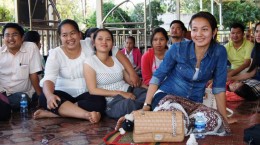
2010 Asia JusticeMakers Fellow Harshi Perera, from Sri Lanka, has recently started working on her project for International Bridges to Justice.  She aims to provide legal aid directly to five women detainees at the Welikada Prison in Sri Lanka, and she also is conducting a nationwide education campaign on the rights of the detainees.  She is doing this by holding community meetings in the homes of people who have received, or are presently receiving, legal aid from her organization, Janasansadaya.  Usually these people have sought their help after being victims of abuse or violence at the hands of police officers, prison guards of public officials.Harshi’s goals are, first, to sensitize the public to their rights, since many people in Sri Lanka believe that violence and torture are an accepted part of the police and prison system.  Second, she wants to insure that people know where to turn if they, a family member or a friend becomes a victim of police brutality or abuse by a public official.  And lastly, she wants the people who come to the home of these victims to understand the difficult battle their neighbor is living through while attempting to uphold their Human Rights.

[Slashdot] [Digg] [Reddit] [del.icio.us] [Facebook] [Technorati] [Google] [StumbleUpon]

IBJ Rwanda Defender Profile: Mary Katushabe

Tuesday, August 3rd, 2010

There is sometimes a blurred line between being the author of a criminal act or a victim of unjust circumstances. It takes a perceptive and compassionate legal professional to distinguish between the two. For Mary Katushabe, a Rwandese defense lawyer, the ability to separate a criminal act from an act of desperation is a natural instinct. In countries in which certain fundamental legal norms, such as the presumption of innocence, are not fully internalized, a defender with Mary’s talent is rare.

Mary has been practicing law for less than two years. She has attended two Legal Defense and Human Rights training events hosted by the IBJ Rwanda Program. She has been outspoken in both, never fearing to initiate a debate when judicial expediency is valued over human rights concerns. She has agreed to volunteer with IBJ, and has already taken many cases. It is the dedication of people like Mary that make the work of IBJ possible.

Mary Katushabe

Above: Mary Katushabe - IBJ Rwanda Legal Defender (Photo by Patrick Pratt)

In July, Mary took the case of a young lady, an orphan, who has been accused of infanticide. The young girl, whom we will refer to as Hope, had been taken in by a family after both of her parents died. She fled the household after repeated mistreatment by the adoptive father. After leaving, Hope learned that she was pregnant. She had few people to whom she could turn. Upon approaching the boy whom she claims impregnated her, he denied his involvement in the conception. Prenatal or maternal care for most young girls in such dire situations is widely unavailable in Rwanda. Coupled with poor living conditions and insufficient nutrition, the incidence of miscarriage or premature birth among young girls is high. Young, uneducated, and destitute, Hope had few good options.

To secure a livelihood and stable housing, many young girls in Rwanda undertake domestic work. Hope took employment with another household, yet over time became too weak to perform her duties. She describes the mistreatment she received from the father of the household as worse than she received at her previous residence.

One day, Hope went to the toilet room thinking that she was experiencing digestive pains. As soon as she positioned over the toilet basin, the baby began to come out. Hope claims that when she realized this, she tried to stand up and go outside. In the process, the baby somehow exited and fell into a bucket of water in the toilet room. The baby died, and Hope was arrested shortly thereafter.

The initial charge levied against Hope was abortion. This was later changed to infanticide. Hope has been imprisoned since April, 2008; and made her first court appearance in June, 2010. Mary has taken the case as an IBJ volunteer.

The story of Hope is one of choice and circumstance. She was in one of the most desperate situations in which any young girl can find herself: She has no family, no means, and was then in a situation which would have brought another life into the same circumstances. Hope could depend on no one, and then found herself in the position of having another life dependent upon her. The story of Hope represents the difficult choices people must make and the difficult circumstances with which they must deal.

p1000458_mary_resized.JPG

Above: Mary and her peers at the 2009 IBJ/KBA legal defense training in Kigali. (Photo by Jesse Blaisdell)

Whether the death of the newborn was accidental or intentional, there is no justice as long as Hope is kept behind bars, voiceless, without a trial for two years. Mary is committed to ensuring that people such as Hope are afforded due process under Rwandan Law. And as long as such cases keep justice out of reach of the vulnerable and destitute IBJ will offer its unconditional support to dedicated defenders such as Mary Katushabe.

[Slashdot] [Digg] [Reddit] [del.icio.us] [Facebook] [Technorati] [Google] [StumbleUpon]

IBJ India conducts Panel Discussion on “Role of Lawyer for Effective Justice” at Kotputli, Rajasthan

Thursday, July 29th, 2010

On July 18, 2010 forty participants in Kotputli,Rajasthan India came together to discuss “The Role of Lawyers for Effective Justice.”  Kotputli is a town about 100 kilometers east of Jaipur. The Panelist were the Additional District & Sessions Judge, Shri Vinay Kumar Gupta, Registrar, Armed Forces Tribunal, Delhi, who came from Delhi, Shri V K Gaud, The Additional Superintendent of Police, Kotputli, past presidents of Kotputli District Court Bar Association Mr. Ashok Saini and Mr. Richpal Chawdhary, Chief Medical Officer Dr. Mahesh Agrawal, Professor Sher Singh principal Tagore Law College, Kotputli and Renowned Advocate Bajramg Sharma. Print Media Journalists were also present and observed the discussion.

The discussion was started by Ajay Verma, Fellow of IBJ & Chairman IBJ INDIA by introducing International Bridges to Justice and its works in India. He also focused the  importance of understanding moral responsibility of Lawyers in effective Justice. He also urges the Lawyers of Kotputli to team up to improve the Legal Aid System in Kotputli.


DSC02501 

Ajay Verma, Advocate Introducing IBJ and Appealing to all to team up to improve the Kotputli’s Legal Aid Work


clip_image002[1]

.                         Former President of Kotputli Bar Association Addressing the Participants

Shri V.K. Gaud, Additional Superintendant of Police, Kotputli provided insight to the participants on importance to examine the police witness and urged the need of district investigation centers equipped with the Cameras and Modern facilities for for examination of suspects. This way transparency and allegation of police torture can be reduced.

DSC02533

                                           Shri V.K. Gaud, Additional Superintendent of Police, Kotputli


Mr. V.K. Gupta, ADJ said that because an accused may be a victim, legal aid is necessary for them as well and the common person can also stand for his case but has more emotions and less knowledge of the law so they need the help of a responsible advocate. In addition, it is the duty of an advocate to treat his client properly.

DSC02543

                      Shri V.K. Gupta, Additional District & Sessions Judge, Delhi  Addressing the Participants


clip_image002[3]

                Mr. V.K. Gupta, AD & SJ, Delhi and Shri V.K. Gaud Additional Superintendent  of Police, Kotputli


DSC02516 Shri Sher Singh, Principal of Tagore Law College focusing the Role of Law Students in Legal Aid


Many advocates also spoke on how they felt about the legal system in their Jurisdiction. They suggested that while advocacy is a noble profession, there should be counseling on how to deal with clients. They also encouraged that advocates should push for mediation and compromises in criminal cases instead of jumping right into court. In addition, they said that each advocate should have one legal aid case a month and the legal aid committee should provide facilities for legal aid lawyers so there can be more lawyers doing legal aid work. These advocates said that when they come across a poor person, they do what they can to guide him whether or not he is their client. Participants found the discussion to be helpful and encouraging and requested another panel discussion be held with the Bar Association in the near future. Professor Sher Singh also wants to do a campaign coordinating his students in villages with IBJ India.


clip_image002[5]

                                           Print Media Journalists in the Event

At the end of the sessions it was requested by the Bar Leaders to organize another panel discussion at the court complex. Ajay Verma, Advocate & Fellow IBJ urged and got assurances from the Law college Principal to team up with the Kotputli Bar Association to improve the Criminal Justice System and Legal Aid work in Kotputli. Bar. Law college offered its willingness to conduct legal Aid clinic, Right awareness in Rural area with the supervision of IBJ INDIA and Bar Association. Soon IBJ India would be organizing a right awareness camp in the rural areal of Kotputli.Rajasthan

Blog by Anisha SIngh, IBJ India Intern

Technorati Tags: ,,,,,

Map picture
[Slashdot] [Digg] [Reddit] [del.icio.us] [Facebook] [Technorati] [Google] [StumbleUpon]

IBJ Burundi Involves Entire Justice Sector in Criminal Defense Training

Tuesday, July 20th, 2010

For the week of July 5th, over 65 members of Burundi’s justice sector community gathered in Bujumbura to receive training in legal techniques. The training was conducted by IBJ Burundi Program in partnership with the Burundi Bar Association and the Association for the Protection of Human Rights and Detained Persons (APRODH). IBJ Fellow in Burundi, Astère Muyango, hailed the training as a great step forward for Burundi’s justice system, which is still on a slow road to recovery after a 12-year civil war - which officially ended in 2005. Though there is much work to be done to strengthen justice in Burundi, the active and enthusiastic participation of all justice sector officials during this week offers an encouraging glimpse into the future.

The first three days of training involved lawyers in practical exercises intended to strengthen their ability to articulate and defend the rights of the accused in the pre-trial detention phase. Lawyers received lessons in common law practices such as cross-examination in preparation for Burundi’s integration into the East African Community. Many lawyers were actively involved in discussions, and were eager to share their experiences with criminal justice in Burundi. There seemed to be a consensus that this training has strengthened the commitment and competence of the legal community to defend the rights of the accused.

On the third and fourth day of training, judges, prosecutors, police officers, and prison officials attended the forum. All participants engaged in roundtable discussions to share insight about their unique function in the criminal justice process. The final day included a mock trial in which all justice sector officials were able to “trade places” to receive insight about the different dimensions of criminal defense. Lawyers were able to try their hand as prosecutors; while prison officials became judges. Prosecutors assumed the position of the accused, and police officers tried their hand as defenders. This exercise involved the case of accused persons who were held for three years until their innocence was determined.

There was no shortage of laughter throughout the mock trial. Participants enjoyed the chance to mimic the caricatures of their professional adversaries. As one police officer bravely received several “torture” sessions as an accused person, many in the audience applauded the performance. Sanjeewa Liyanage, IBJ’s International Programs Director, concisely explained the comedic value of the training exercise. “Many of us were laughing because what we observed seemed utterly ridiculous. And that is precisely the nature of the predicament in which too many detainees find themselves: ridiculous.”

All participants responded overwhelmingly positively to the training exercises. (Prison officials and police were only dismayed that they had not attended the first three days of training). For a country in which three in five prisoners are pre-trial detainees, the sustained engagement of all justice-sector actors is absolutely necessary to alleviate Burundi’s overburdened prisons. Burundi has yet to establish a legal aid mechanism or a separate juvenile justice system. As the country continues on the path towards reconstruction, these are critical areas to address. However, the prospects for the rights of the accused have improved as a result of this training. It will only take the commitment of the participants to turn these skills into results.

The IBJ Burundi program is headed by IBJ Fellow Astère Muyango, who brings with him a long track record of human rights advocacy. The closing ceremony was attended by Isidore Rufyikiri, President of the Bar Association, and Pierre Claver Mbonimpa, the founding director of APRODH. Both men are tireless defenders of human rights in Burundi, and both are IBJ Country Advisory Members. You can read more about them here, and more about the Burundi Program here.

ibj-formation-277-lawyers-resized.jpg

Above: Burundi’s vibrant legal community gathered at the training (Photo by Patrick Pratt)

p1090652-mocktrial-resized.JPG

Above: A glimpse at the mock-trial that took place the last day of the training. (Photo by Patrick Pratt)

p1090769-group-pic-resized.JPG

Above: Training participants included military judges, police officers, prison officials and lawyers. (Photo by Patrick Pratt)

p1090491-group-discussion-resized.JPG

Above: Group discussion at the training. (Photo by Patrick Pratt)

[Slashdot] [Digg] [Reddit] [del.icio.us] [Facebook] [Technorati] [Google] [StumbleUpon]

IBJ Rwanda Hosts Second Legal Defense Training Event

Friday, July 9th, 2010

On July 2nd and 3rd, more than sixty Rwandese defense attorneys gathered in Kigali to attend an IBJ training event- the second of its kind- hosted by the IBJ Rwanda Program. The curriculum emphasized criminal defense practices, with particular emphasis on early access to justice. The event was organized with the generous assistance of the Kigali Bar Association.

IBJ International Program Director Sanjeewa Liyanage and IBJ Rwanda Fellow John Bosco Bugingo invited participants to discuss constructively the current state of the Rwandan judicial and penal systems. The two facilitated discussion about how best to engage judicial actors and institutions in Rwanda to work collaboratively on these and other challenges. Participants in the training grappled with fundamental legal issues such as the presumption of innocence and the credibility of witness testimony. These exercises are intended to develop skills to address the problems of pre-trial treatment of the criminally accused in Rwanda. The training event is intended to bolster the capacity of the legal professional community to cope with these and other pressing issues. It is hoped that these practices will ultimately prevent further unnecessary prison congestion.

IBJ - Rwanda Training Participants IBJ Rwanda Training Participant

Attorneys Stephanie Slattery of the U.S. and Anita Mugeni of Rwanda volunteered their time to conduct training exercises. Stephanie traveled all the way from San Diego, California to demonstrate legal techniques in case analysis and cross-examination. The nature of the Rwandan legal system – based on civil law – tends to leave lawyers at the mercy of judges and the accused at the mercy of law enforcement. The current deliberate transition toward common law in Rwanda necessitates the kind of skills among lawyers that this training provides. The pair engaged participants in critical thinking exercises in hopes to strengthen the ability of lawyers to represent tough cases. Such cases currently leave defendants in Rwandan prison without adequate representation.

One anonymous public defender laments “many of the judges - even in the high courts – do not understand the concept of innocence. As far as [presumption of innocence is] concerned, it is very clear in our laws. However, the problem is implementation.” He suggests that it is the responsibility of dedicated lawyers to challenge the institutions in Rwanda to uphold the law.

Sanjeewa Liyanage and John Bosco Bugingo conducted several exercises which challenged attendees to engage in abstract thinking. Participants were invited to explore their personal stories, and their fundamental motivations for pursuing a legal career. Also, they were requested to form models of what the Rwandan legal system could become within the next twenty years if given adequate resources. These “visioning exercises” are intended to allow the lawyers to imagine what is possible in the Rwandan legal system beyond its current state. The lawyers present engaged in serious discussion about the future of the country’s judicial institutions and they were, for the most part, optimistic.

Sanjeewa Liyanage gives an interview to the media at Laico Hotel, KigaliJohn Bosco Bugingo Gives an Interview at Laico Hotel, Kigali

The event was covered by the local media, and received recognition in Rwanda’s most circulated newspaper. Sanjeewa and John Bosco gave an interview in which they detailed the mission of IBJ and its current operation in Rwanda. With growing attention to the work of IBJ in Rwanda, the challenges of Rwanda’s legal and penal system will hopefully become a matter of serious public discussion.

Upon completion of the two-day training, the president of the Kigali Bar Association, Me. Vincent Karangwa, attended to offer his thanks to IBJ and to wish the participants success. He addressed the youthful crowd; many of whom are newly-minted lawyers. Karangwa, on the other hand, is in his final year of service to the Bar, and will retire before the next training session. As he prepares to leave the legal profession, he is hopeful that the next generation of lawyers will be able to successfully address the challenges which lay ahead for Rwanda. As long as they are up to the task, IBJ will be there to assist.

[Slashdot] [Digg] [Reddit] [del.icio.us] [Facebook] [Technorati] [Google] [StumbleUpon]

Kigali DRC Finds a Place to Call Its Own

Monday, June 28th, 2010

On Thursday, June 24th, the IBJ-Rwanda Defense Resource Center (DRC) settled into its new headquarters in Remera - a bustling corner of eastern Kigali. This opening arrives a week ahead of the 48th anniversary of Rwanda’s independence; and ten days before Rwanda’s Liberation Day - a mere 16 years ago. Though these are significant milestones for a country which has overcome unimaginable obstacles, IBJ Rwanda Fellow John Bosco Bugingo knows there is still much work to be done if Rwanda is to reach its potential.

Since its inception, the IBJ Rwanda Program was housed at the firm of the IBJ Country Fellow, Bugingo - “JB” to those who know him -with the patient acquiescence of his partners. The office kept long hours, as he transitioned seamlessly between the roles of public defender and IBJ Fellow.

The opening of the DRC is a significant achievement, and represents one of four components of the IBJ-Rwanda program. The purpose of the DRC is to provide a forum for public defenders to access legal resources, prepare cases, and seek advisement from IBJ criminal defense experts. The DRC is funded with a grant from the National Endowment for Democracy (NED).

The IBJ-Rwanda program also includes provisions for a criminal defense task force, which in partnership with the Kigali Bar Association and the Ministry of Justice, seeks to improve Rwanda’s legal aid capacity. Before opening the DRC, IBJ-Rwanda successfully conducted the first of many national campaigns intended to educate the citizenry of their basic legal rights. Also, the program seeks to create a core of well-trained defense lawyers through a series of special training events - the second of which occurs on July 2nd and 3rd. These are ambitious projects, which the opening of the IBJ-Rwanda Headquarters and DRC is intended to facilitate.

As the nation prepares to celebrate during the upcoming holidays, the IBJ-Rwanda staff, volunteers, and associates are continuing to pursue their mandate: to fundamentally change defense practices in Rwanda to ensure that the legal system benefits its citizens. Though less monumental than Rwanda’s Independence and Liberation Day Commemorations, the opening of the Kigali DRC is surely also worth celebrating.

Building in Remera, Kigali which houses IBJ-Rwanda DRC

Above: Building in Remera, Kigali which houses IBJ-Rwanda DRC. (Photo by Hadijah Batamuriza)

Rwanda Country Fellow John Bosco Bugingo (right) and DRC Coordinator Hadijah Batamuliza (left)

Above: Rwanda Country Fellow John Bosco Bugingo (right) and DRC Coordinator Hadijah Batamuriza (left) (Photo by Patrick Pratt)

Patrick Pratt - IBJ Rwanda intern, summer 2010

Above: Patrick Pratt - IBJ Rwanda intern, summer 2010 (Photo by Hadijah Batamuriza)

[Slashdot] [Digg] [Reddit] [del.icio.us] [Facebook] [Technorati] [Google] [StumbleUpon]

Zimbabwe: creation of an e-group to follow-up on the action plan of a roundtable discussion on rights awareness strategies

Wednesday, April 7th, 2010

IBJ-Zimbabwe Fellows, Innocent Maja and John Burombo, recently held a roundtable discussion with its partner organizations, LRF and ZACRO, journalists and private lawyers to strategize on how to implement IBJ’s rights awareness campaign in Zimbabwe. During the engaging and fruitful discussion, held on 18 March in Harare, the participants were able to identify the main areas requiring rights awareness in Zimbabwe. These included issues related to arrest, search and seizure, access to legal counsel, appearance before court timeously, bail, institutional reforms, legal aid, timeous execution of cases and empowerment of citizens to assert their rights.

After identifying these areas, the officers then proposed strategies on how to implement the campaign. They agreed that it was important to identify the particular target groups for the campaign to come up with specific strategies for each group. This would entail using clearly focused mechanisms. These mechanisms included use of dramas and movies, use of the print and electronic media to demystify the rights, use of posters and leaflets, use of target group-specific manuals, use of t-shirts and other regalia, putting up of billboards and carrying out of road shows to reach out to all communities. The participants also believed there was need to engage other state institutions, like the police, and have them participate in the campaign as well. It was agreed that this would go a long way in building a culture of respect for human rights.

The participants then came up with specific action plans for the implementation of these strategies. It was agreed that an e-group for all participants be created to ensure that the commitments agreed upon are followed up and implemented. Participants expressed gratitude at the hosting of the discussion by IBJ, with one participant commenting that the “discussion atmosphere was good and enabling.”

[Slashdot] [Digg] [Reddit] [del.icio.us] [Facebook] [Technorati] [Google] [StumbleUpon]

IBJ concludes a three-day major event in Bururi province

Friday, March 5th, 2010

From 23 to 25 February, IBJ staff went to Rumonge, a city in the south of the country, to conduct two activities. For the first time indeed, both a street law campaign and a round table were conducted at the same time, thanks to the invaluable help of six volunteers recruited by the local APRODH office. While the rural population was educated about its legal rights, stakeholders of the penal system gathered to find solutions to the difficulties of pre-trial detention. This issue remains a crucial challenge for the Burundian State in order to promote the rule of law, as more than 63% of Burundian detainees are awaiting trial as of the 31st of January 2010.

dscf7542.JPG

Above: IBJ Fellow Astère Muyango briefing volunteers who were to conduct the awareness campaign while IBJ staff would organize the round table. Photo: Caroline Arnaud

IBJ warmly thanks all the attendees for their participation. In addition to four lawyers who kindly traveled from Bujumbura, many members of Bururi and Makamba jurisdictions were present, such as the president of the Tribunal de Grande Instance of Bururi, the director of the Rumonge prison, and the Procureur de la République of Bururi. At the end, there were more than 25 people who tried to solve the delicate problem of pre-trial detention. After having indentified the challenges to an efficient penal system, the participants considered the possible causes of these dysfunctions.

dscf7635.JPG

Above: All the stakeholders of Bururi and Makamba provinces’ legal system gathered to find solutions to the issue of the pre-trial detention. Photo: Caroline Arnaud

They showed a real commitment to denounce the obstacles they encountered, identifying, throughout open discussions, what is not working. A new problem was pointed out: several police officers and members of the administration try to leverage a loophole in the law to arrest people for an offense which is not forbidden by the penal code. Indeed, many people are arrested for “consumption of prohibited alcohol”, while this alcohol, although dangerous, is not forbidden by the Burundian Penal procedure code. The aim of these illegal arrests is quite clear-cut: policemen do not release detainees unless they pay a semi-official bail. The participants strongly condemned this too recurrent practice and let themselves in for trying to make its consumption officially out-of-law. They moreover committed to several other concrete engagements, such as meeting each other on a regular basis, as a dialogue platform in which everyone express his difficulties is definitely lacking. Each participant made real commitments to improve the legal system within their capacity. Lawyers even proposed to offer pro-bono legal assistance to pre-trial detainees of the Bururi and Makamba provinces. IBJ acclaims this exemplary commitment.

These three-day events ended with everyone being willing to make change happen, for what IBJ expresses its profound gratitude.

dscf7589.JPG

Above: Divided in different groups according to their function, participants discussed about what they could do in order to improve the legal system in Bururi and Makamba province. Here lawyers discussing. Photo: Caroline Arnaud

[Slashdot] [Digg] [Reddit] [del.icio.us] [Facebook] [Technorati] [Google] [StumbleUpon]

Cibitoke roundtable discussions bring lawyers, magistrates and prison officials together on a path of reforming the juvenile justice system in Burundi

Wednesday, February 3rd, 2010

On 9th December 2009, IBJ co-organised a fifth roundtable with APRODH in the province of Cibitoke. The aim was to gather members of the Burundi judicial system- whether lawyers, prison officials, police officers, prosecutors and judges- to discuss the issue of juvenile criminal justice. APRODH’s help was once more invaluable, since it contributed to prepare the event in Cibitoke province, sending invitations to the relevant members of the local justice system.

p1010559.JPG

Above: Senior councillor of Cibitoke province governor, post officer of Mpimba prison, and IBJ Fellow Astère Muyango. Photo: courtesy of Jean-Baptiste Bouzard.

As of the 15th November 2009, a total of 461 juveniles are incarcerated in the 11 detention centres across the country. Among them, more than two thirds are still waiting for their trial. Further, juvenile criminality tends to increase.

This roundtable was thus an opportunity to discuss about this disquieting situation, firstly by identifying its deep causes. However, the main goal of the meeting was to bring members of the justice system together to find out appropriate solutions to the lack of proper juvenile criminal justice system in Burundi. To reach this objective, participants were divided in different groups according to their occupation. This enabled each member of each group to feel concerned about the issue and urged to commit himself, at his own level and within his capacity. Consequently, dialogs concluded with concrete suggestions aiming at ameliorating procedures involving children, finding alternative sanctions to imprisonment, and lastly improving children’s lives while imprisoned.

p1010543.JPG

Above: Astère Summarizing work groups’ suggestions. Photo: courtesy of Claire Habimana.

Beside, copies of the new Penal Code and the Legal Defense Manual were distributed to participants. This manual was prepared by the attorney Mehdi Benbouzid with a view to build the capacity of Burundian lawyers to provide quality and committed counsel to clients. The discussions were an opportunity to point out that Burundi had ratified the Convention on the Rights of the Child, which therefore ought to be enforced in the country. IBJ’s lawyer Herman Ndayishimiye brought some copies of the main articles of the Convention to remind the actors of the justice system of the Government’s obligations in terms of the administration of juvenile justice.

The outcome of this roundtable is truly encouraging. IBJ expected concrete commitments of participants, and the goal was reached. In a friendly atmosphere, each participant was urged to feel part of the Cibitoke justice system and ready to make his best to improve it.

photo-de-groupe-table-ronde-cibitoke.jpg

Above: all participants gathered to make evolve minors’ judicial system. Photo: courtesy of DieudonnĂ© Ndayishimiye.

[Slashdot] [Digg] [Reddit] [del.icio.us] [Facebook] [Technorati] [Google] [StumbleUpon]

China Update: December 4th Rule of Law Promotion Day

Friday, December 4th, 2009

On December 4, 2009, International Bridges to Justices’ China offices participated in the annual Rule of Law Promotion Day. The goal is to increase awareness of the legal rights provided to Chinese citizens. Since 2003, IBJ has partnered with the Peking University School of Law and the All-China Lawyers’ Association’s Constitutional and Human Rights Law Committee to launch extensive legal rights awareness campaigns on December 4th of each year.

beijing-xinjiangdec4.jpg

This year, the legal education campaigns were aimed at informing the most vulnerable groups in society of their procedural rights in criminal cases, focused primarily on permanent rural residents, returning migrant workers, and their children. In partnership with local law firms and law students, staff from IBJ’s headquarters in Beijing facilitated a series of different events, which happened in 12 locations all over China.

Two days before December 4th, staff from IBJ’s Southeast Regional Defender Resource Center in Wuhan, in conjunction with Wuhan University law students and the Center for the Protection of the Rights of Disadvantaged Citizens, engaged with participants at an employment fair in Wuhan. Standing under the banner “All People Have Equal Opportunities”, the students and lawyers spoke with everyone who passed the tables. They addressed questions from workers on how to get employers to pay their salaries, discrimination in hiring and insurance for work-related injuries.

wuhandec2fair.jpg
On December 4th, IBJ’s Wuhan staff engaged local players in the justice system in a discussion that featured a migrant rights lawyer and a disabilities rights lawyer. At this event, lawyers from private firms, professors, judges, police officers and students discussed the pertinent legal issues faced by migrant workers. Their discussion highlighted the powerlessness of migrant workers when companies refuse to the pay them, because these workers do not have official contracts. Additionally, when migrant workers sustain work related injuries, they are not covered by their company’s insurance. Even in the rare instance when migrant worker receives compensation in court, it is hard for judges to enforce the ruling.

wuhandec4.jpg

On the same day, staff from the IBJ’s China National Defender Resource Center joined lawyers from Beijing Impact Law Firm, professors from Beida University and Central University of Finance and Economics organized a legal rights awareness event in Inner Mongolia. In the capital of Hohhot, they visited a juvenile detention facility and organized a discussion  with local officials and legal aid lawyers on the legal issues faced by the children of migrants.

mongoliadec4roundtable.jpg
On December 5th, South East Defense Resource Center staff visited a local legal aid center in the countryside about two hours from their office in Wuhan with two law students. This local legal aid center, which has one lawyer and four legal aid workers, mediate disputes for the local people, include issues of divorce, property and personal injury claims. During their visits, the law students and SEDRC staff engaged in discussion with the staff and handed out IBJ’s brochures on legal rights, which generated a great deal of interest in groups of local migrant workers.

wuhandec5.jpg
IBJ’s Northwest Regional Defender Resource Center in Xi’an also held several events in celebration of Rule of Law Promotion Day. On December 4, IBJ’s Xi’an office worked with law students from Northwest University of Politics and Law, Beijing Law School educated 200 workers about their rights through public consulting tables. Agricultural workers were primarily concerned with the issue of broken salary contracts - there was a case of a woman who claimed that her brother was owed 200,000 RMB by his company. Another common issue was work related injuries. At this event, IBJ was able to network with local law firms in order to talk about criminal cases.
Through the successful events of the December 4th Rule of Law Day, IBJ’s China offices continue to establish partnership with local universities and law firms in order to spread awareness about the legal rights all over China.

[Slashdot] [Digg] [Reddit] [del.icio.us] [Facebook] [Technorati] [Google] [StumbleUpon]