Archive for the ‘Burundi’ Category

Accomplished President of the Burundi Bar Association joins IBJ’s Burundi Country Advisory Council

Wednesday, December 16th, 2009

IBJ is extremely delighted to announce that the Bâtonnier Isidore Rufyikiri has just joined its Burundi Country Advosiry Council.

A dedicated lawyer for over 9 years, Isidore has defended hundreds of accused persons - often taking on his own resources to assist defenceless persons - and sometimes risking his own freedom for the sake of justice. His work as a passionate lawyer is only the most current embodiment of his lifelong commitment to the rule of law. His brief career as a public prosecutor taught him how an unbalanced justice system where prosecution is one-sided disservices the ideal of fair and transparent justice system. He later embraced a diplomatic career as first counsellor at the Embassy of Burundi in Algeria and later Tanzania, whereby he gained international exposure and a sound knowledge of the workings of international relations.

Today, as President of the Bar Association, Isidore concentrates all his efforts at ensuring systematic access to legal counsel for every Burundian accused of a crime. His leadership has led him to work closely with the United Nations Integrated Office in Burundi to draft a bill outlining the legal framework for legal aid (Loi portant cadre lĂ©gal d’assistance judiciaire et d’aide juridictionnelle), which has been submitted to the Ministry of Justice for review.

Isidore knows that pointing out at torture and expressing opposition to the government can be risky. Accused of “attempting to public order” at three different occasions, Isidore spent consecutively 2 months, 4 years and 6 months in prison, with no access to his family, little access to food and no medical treatment. He felt very ill as the prison conditions were - and are still - adverse and inhumane.

He last got arrested on August 3rd, 2006 when he openly complained, as a lawyer, that four high-ranked officials had been badly tortured by the Burundi Intelligence Agency. He remembers that the victims could barely walk. Determined to bring as much attention as possible to what he considers is totally unacceptable, Isidore wrote an official letter to the chief of the secret services, copied to the President of the Republic, the Minister of Interior, the Minister of Justice, and a flurry of media and NGOs which voiced concern over the allegations that his clients had been tortured. He then started receiving anonymous calls and threats. A couple of days later, a group of policemen surrounded his law firm, arrested him, and threw him back to jail. Each single time he got arrested, Isidore refused to receive the help of any lawyer: he ensured his own representation. He has been released on parole.

This eventful life has shaped his personality, reinforced his natural leadership qualities, unwavering dedication to human rights and audacity and inspired him to start writing a book about his experience.

Isidore joins forces with Pasteur Nzinahora and Pierre Claver Mbonimpa - the other two notable members of the Burundi Country Advisory Council - to help Astère spearhead a movement in favor of the rights of the prisoners and lay the foundations for a functioning legal aid system in Burundi.

p1000751_isidore_mou_resized.JPG

Above: Negotiating the MoU between the Burundi Bar Association and IBJ, July 2009 (Photo by Fanny Cachat)

p1010264_resized_opening_training.JPG

Above: Opening the 2009 summer legal defense training in Bujumbura with IBJ Founder and CEO (Photo by Fanny Cachat)

p1010352_resized_at_batonniers_home.JPG

Above: Sharing a drink at the Bâtonnier’s house after the successful conclusion of the MoU, July 2009 (Photo by Sanjeewa Liyanage)

[Slashdot] [Digg] [Reddit] [del.icio.us] [Facebook] [Technorati] [Google] [StumbleUpon]

Burundi and Rwanda Fellows lay the foundations for collaboration in the East Africa region during the 14th East Africa Law Society Annual General Meeting

Tuesday, December 15th, 2009

On November 27th and 28th, IBJ Burundi Fellow - Astère Muyango - and IBJ Rwanda Fellow - John Bosco Bugingo - attended the 14th East Africa Law Society (EALS) Annual General Meeting in Kigali. The event was co-sponsored by our local partner in Rwanda, the Kigali Bar Association, and opened by the President of the Republic of Rwanda himself, Honor. Paul Kagamé.

The conference brought hundreds of lawyers from the Law Society of Kenya, the Tanganyika Law Society, the Uganda Law Society, the Zanzibar Law Society, the Kigali Bar Association and the Burundi Bar Association together on a path of reforming the legal aid system across the region. The progressive integration of all five East African countries demands the harmonization of practices and procedures across the region.

While the first day of the conference was dedicated to business law and economic integration, the second day focused on the role lawyers can play in promoting the advancement of human rights and access to legal aid across the region. Each country introduced its legal aid system, highlighting the specific challenges to universal access to legal counsel.

Herbert Rubasha, a member of IBJ’s Rwanda Country Advisory Council, presented his paper on access to legal aid in Rwanda. He was echoed by representatives of the Uganda Law Society, the Burundi Bar Association, the Zanzibar Law Society and the Tanganyika Law Society. They all stressed the urgent need for a State-sponsored system which ensures timely access to counsel for all citizens, regardless of the crime they are suspected of having committed.

Burundi’s situation is particularly alarming: as opposed to the other East African countries whose law societies bear the burden of legal aid, the sporadic legal assistance provided in Burundi is exclusively manned by non-governmental organizations and a handful of young passionate lawyers, who take on their own time and resources to protect their fellows’ legal rights.

Astère and Bosco kept abreast of the latest regional innovations. They also built connections with senior members of other countries’ bar associations. Dr Fauz Twaib, the President of the Tanganyika Law Society, and member of the EALS Executive Council, Bruce Kyerere, President of the Uganda Law Society and member of the EALS Executive Council, and other key members of the EALS Executive Council  all expressed a desire to work with IBJ to promote systematic access to legal counsel across the region. Don Deya, the CEO of the EALS, displayed a particular interest in IBJ’s idea of a regional training hub in Kenya. Relationships have also been initiated with other African countries’ bar associations, in particular the Law Society of Zambia and Ghana Bar Association.
p1010421_jb_astere_resized.JPG

Above: Bosco (left), IBJ Rwanda Fellow and Astère (right), IBJ Burundi Fellow pausing together during a break.

astere-bruce-kyerere-uls_-president_resized.jpg

Above: Astère (left) and Bruce Kyerere, the Uganda Law Society President (Photo by John Bosco Bugingo)

astere-dr-fauz-twaib-tls_-president_resized.jpg

Above: Astère (right) with Dr. Fauz Twaib, the Tanzania Law Society President (Photo by John Bosco Bugingo)

astere-ghanean-law-society_-president_resized.jpg

Above: Astère and the President of the Ghana Bar Association (Photo by John Bosco Bugingo)

la-photo-de-groupe-des_-laureats-des-prix-eals_resized.jpg

Above: The recipients of Awards at the 14th East Africa Law Society Annual General Meeting (Photo by Astère Muyango)

[Slashdot] [Digg] [Reddit] [del.icio.us] [Facebook] [Technorati] [Google] [StumbleUpon]

28 detainees released as a result of coordinated efforts of Burundian lawyers, magistrates and prison officials

Monday, December 14th, 2009

The roundtable discussion held in Gitega on October 15th on the issue of pre-trial detention concluded with great promises. The hope was to achieve a similar result as the one obtained following the roundtable discussion in Bubanza, which ultimately led to the release of 45 prisoners, among which 15 juveniles.

The promises have been kept. A month after the commitments taken during the roundtable discussion, 3 lawyers left Burundi’s capital city, led by IBJ Legal Fellow - Herman Ndayishimiye-, on November 24th to head to Gitega’s prison where AndrĂ© Mbayabya, the Prison Director, was waiting for them. Together, they scoured prison records and identified 182 cases of irregular pre-trial detentions. Among this overwhelming figure, 28 cases were identified as requiring immediate atention. The 4 lawyers therefore met with their clients, got familiar with each of their stories and prepared their defense strategy. As agreed with Gitega’s prosecutor and the magistrates who had attended the roundtable discussion, a special court session was conducted the day after to expedite these 28 cases. The result was a resounding success: all 28 detainees were immediately released.

This is a particularly significant result in today’s Burundi: recent prison riots - first in Gitega and then in Mpimba, Bujumbura’s central prison - have thrown the light on the detrimental prison living conditions, which have gotten worse since the peak of 11,000 prisoners nationwide has been reached two months ago. Irregular pre-trial detentions overburden a prison system which is already in shambles. Prisoners are not the only one protesting against the situation: Mpimba’s prison officials have declared that they would not accept any new prisoner in the prison as long as the trial of the many pre-trial detainees is not expedited. The ball is in the court system’s court.

escorte-dee-detenus_resized.jpg

Above: The detainees being escorted by a policeman to the Gitega Tribunal de Grande Instance (Photo by Dieudonné Ndayishimiye)

me-diane-communiquant-avec-les_-detenus-resized.jpg

Above: Volunteer lawyer Diane preparing the defense of a client (Photo by Dieudonné Ndayishimiye)

me-zenon-avec-les_-detenus-resized.jpg

Above: Volunteer lawyer Zénon preparing the defense of a woman (Photo by Dieudonné Ndayishimiye)

p1010311detainees_resized.JPG

Above: There aren’t sufficient handcuffs within Burundi’s justice system. Detainees are usually handcuffed by pairs. (Photo by DieudonnĂ© Ndayishimiye)

p1010315resized.JPG

Above: Volunteer lawyer Diane interviewing a client before his court hearing (Photo by Dieudonné Ndayishimiye)

p1010325resized.JPG

Above: Burundian detainees queuing for justice (Photo by Dieudonné Ndayishimiye)

img_6078_inside_resized.jpg

Above: Inside a women’s cell in Gitega prison (Photo by Nathalie Mohadjer)

img_6097_andre_resized.jpg

Above: Portrait of Gitega Prison Director, André Mbayabaya (Photo by Nathalie Mohadjer)

[Slashdot] [Digg] [Reddit] [del.icio.us] [Facebook] [Technorati] [Google] [StumbleUpon]

Commemorations of the 61th Anniversary of the Universal Declaration of Human Rights in IBJ’s country programs

Wednesday, December 9th, 2009

The 10th of December is a day of remembrance, remembrance of the victims of human rights abuses. It is also a day to pay tribute to those who have stand up for their rights. Finally the 10th of December is a day of celebration; celebration of all the progress that has been made and celebration of what needs to be accomplished to achieve Rule of Law in every corner of the globe.

On this special occasion, IBJ intends to remind international, national and local communities of its particular approach to human rights - protecting the legal rights of the people who become victims of unchecked justice systems - and renew its commitment to fair justice systems through a series of consciousness-raising activities across its country programs.

IBJ West Bengal Fellow Abhijit Datta is embarking its organization, MASUM (Banglar Manabadhikar Suraksha Mancha), in a large human rights fair that will be held this coming Thursday at the vicinity of Academy of Fine Arts of Kolkata. Abhijit rallied support from other grassroots civil rights and human rights organizations. Together, they will coordinate exciting awareness-raising activities: an art exhibition will depict pictures of human rights violations; booklets, publications and other materials informing citizens of their legal rights will be widely distributed; public orations - including testimonies of victims of abuses - will be organized throughout the day. Big awareness-raising banners will be displayed at strategic places at the Indo-Bangladesh border, where minority tribes are particularly vulnerable to human rights violations.

img_5072-kids_banner_resized.jpg

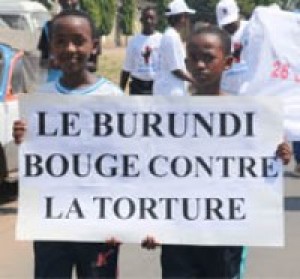
Above: Burundian kids hold a poster reading “Burundi moves forward against torture” during the 26th of June rights awareness campaign in Bujumbura (Photo by Nathalie Mohadjer)

Abhijit’s efforts will be echoed by Astère’s, IBJ Burundi Fellow. IBJ Burundi team left yesterday for the North-West province of Cibitoke where a street law campaign will be conducted. The team will be dispatched at strategic places of the city and will engage the local population in constructive discussions about their rights and responsibilities within the justice system. Men, women and children will be put in the situation of being arrested for a petty crime and asked what they think their legal rights are. Eventually, an engaging poster and memo card about their rights at time of arrest will be handed out to them. A round table discussion on alternative sanctions to imprisonment will be conducted the day after. The platform will unite legal practitioners with magistrates, prosecutors, police officers and prison officials and put them on a path towards reforming the justice system.

A similar on-street canvassing advisement of rights campaign will be organized in Cambodia, where IBJ Fellow Ouk Vandeth and the rest of the team will capitalize on the 25 campaigns held throughout 2009 to make sure local population are best approached, engaged and educated about their legal rights in case of arrest.

[Slashdot] [Digg] [Reddit] [del.icio.us] [Facebook] [Technorati] [Google] [StumbleUpon]

Sparking coordinated answers to pre-trial detention and educating citizens about their legal rights in Gitega

Wednesday, October 28th, 2009

From October 14th to 16th IBJ left Bujumbura to head to Gitega, Burundi second largest city, to pursue its roundtable program and rights awareness campaigns. We already did the two hours drive in July with the visiting team from Geneva so as to visit the local prison and former participants to the June training session. We then came back in September to be formally introduced to officials and initiate the necessary contacts for organizing activities in the province.On Wednesday 14th October, after one holiday commemorating the assassination of Prince Louis Rwagasore, hero of national independence, the small IBJ car left Bujumbura with Astère, Claire and I onboard. We first went back to the same guest house where we lodged some 3 weeks before and then joined Nestor, APRODH local representative, to start with a first afternoon full of surveys. As usual, people were a bit shy and didn’t want to be the first to be interviewed. After a few minutes however, ice was broken and people were massing around interviewers and questions were answered by many participants at the same time, creating a nice mess with newcomers wishing to grab posters distributed by IBJ. This session lasted more than 3 hours, sometimes interrupted by heavy rain, a common fact during this period of the year. We were back at 6.30 in the guest house where we spent a quiet evening and we didn’t wait long before going to bed. We nonetheless took the precaution to order our breakfast in order to avoid last time surprise to wait for more than one hour to get 3 omelettes!

The day after started at 7am with our pre-ordered breakfast and we then dropped Astère at the venue so as for him to begin preparing for the event. MaĂ®tre Herman Ndayishimiye, freshly recruited IBJ lawyer, was already waiting for us and replaced Astère in the car to head to the Vice Governor’s office, whom we had met 3 weeks before to express our wish to hold a roundtable and ask him to open the session. Unfortunately, he had forgotten the event and committed himself to open another roundtable. At the last minute, he nevertheless managed to free himself up to respect his initial engagement. In the meantime, the first participants had arrived at the venue, among them 6 lawyers coming from Bujumbura with DieudonnĂ©, who has recently joined IBJ Burundi as a volunteer. After the opening speech of the Vice Governor and Astère’s welcome speech, Herman started animating the debates and introducing the problematic. Following the results reached in Bubanza, the session was once again dedicated to the question of pre-trial detentions. After having seen how pre-trial detentions were averse to the principle of alleged guiltlessness, the participants broke out into groups in order to identify the root causes of this phenomenon. Various ideas were suggested such as the lack of vehicles and fuel to allow judges to visit detainees and speed up procedures, the lack of access to lawyers or even paralegals to inform detainees of their rights. More challenging, some participants highlighted a certain shortage of professional conscience and even political pressures put on magistrates that lead to the justice dysfunction.

During the afternoon, participants were requested to reflect upon concrete solutions to put an end to this predicament. Numerous ideas were put forward, ranging from pleading the nullity of the procedure for lawyers defending long-term pre-trial detainees to making available police escorts to facilitate detainees’ transfers to courts so as to accelerate procedures. The most interesting proposal came along with the lawyers’ group suggesting to renew the operation held in Bubanza consisting in mandating lawyers coming from Bujumbura to visit Gitega prison and to point out illegal detentions. A few days after, a special court hearing could be organized where judges would statute on potential releases. Members of the penitentiary administration turned out enthusiastic and magistrates were not opposed to the proposal. Details have now to be discussed between IBJ and APRODH on how we could effectively support this effort.

After group pictures, participants went back home but the IBJ delegation stayed in Gitega for another last day of rights awareness campaign. Overall, about 1450 people have been educated about their rights in Gitega. We had a very safe night too, surrounded by several machine gun equipped security men, as the President of the Senate was also finding shelter at our guest house, even if he was hardly recognisable the next morning, as he was wearing sport suit and slippers… Our last day in Gitega went on smoothly and was dedicated to post-campaign surveys, aiming at evaluating the efficiency and visibility of our awareness efforts in Burundi. We finally left Gitega Friday at the beginning of the afternoon, after having shared a last lunch with our local partner APRODH representative and the young volunteers who helped us raising the population awareness. The drive back was a bit longer due to abundant rains making the road slippery and a few stops to buy delicious vegetables, while listening to rock music or religious preaches, depending on preferences. Anyhow, at the end of the path, it was a well deserved week-end for everyone.

4049625295_1fa3966e161.jpg

Above: The banner displayed in downtown Gitega (Photo by Jean-Baptiste Bouzard)

4049624569_f8f9cbcf59.jpg

Above: The Senior Counsellor of Gitega Governor opening the roundtable (Photo by Claire Habimana)

4049627629_2c37ce928e.jpg

Above: Breaking out into groups: lawyers discussing strategies to curb pre-trial detention (Photo by Jean-Baptiste Bouzard)

4049628433_cc050ab7fa.jpg

Above: Senior prison officials putting together ideas to fight prison owercrowding in Gitega (Photo by Claire Habimana)

4050375654_6ac51a7619.jpg

Above: Police officer exposing the commitments of the police to reduce pre-trial detention (Photo by Claire Habimana)

4050377950_2675e7fb9c.jpg

Above: Participants of the roundtable reflecting upon the challenge of delayed justice (Photo by Jean-Baptiste Bouzard)

[Slashdot] [Digg] [Reddit] [del.icio.us] [Facebook] [Technorati] [Google] [StumbleUpon]

IBJ Gitega Roundtable featured on National Burundian Radio “Isanganiro”

Monday, October 19th, 2009

Following up on the resounding success of Bubanza roundtable in late July 2009, a new roundtable discussion on the theme of pre-trial detention has been conducted, last week, at Gitega, the country’s second largest city. Similarly to Bubanza, Gitega prison struggles with overcrowding: while the official capacity is 400, 1504 prisoners are currently held within the walls of the prison. The Penitentiary Administration reports that, as of September 15th, 43% of these detainees are awaiting trial.

On October 15th, lawyers, magistrates, prosecutors, police officers and prison officials joined forces to explore concrete ways in which criminal procedures could be upheld, so as to reduce pre-trial detention. Participants courageously committed to alleviate the situation of Gitega prison: with the support of magistrates and prison officials, a group of lawyers will work at expediting the trials of pregnant women, girls and juveniles, who have been kept on remand beyond the legally-specified time period.

Bujumbura-based Isanganiro radio (which means “meeting point” in Kirundi) sent a journalist to cover the event and later related the news during its daily news program. 3 minutes of the 13-minutes program were dedicated to raise the attention on the country’s alarming prison overpopulation rate, listing the challenges relating to pre-trial detention and reminding of key criminal procedure provisions. The program concluded with highlights of the concrete commitments and plan of action agreed as a result of the roundtable.This coverage brings the light on a fundamental legal right  too few Burundian citizens are aware of.

To listen to the radio program in French, please click here.

(Please note that the part dealing specifically with IBJ  roundtable starts around minute 10).

[Slashdot] [Digg] [Reddit] [del.icio.us] [Facebook] [Technorati] [Google] [StumbleUpon]

Welcome to Herman Ndayishimiye, IBJ Burundi Legal Fellow

Thursday, October 15th, 2009

IBJ is delighted to announce that Herman Ndayishimiye, a defense attorney with over fifteen years of practical legal experience, has just been recruited as IBJ Burundi Legal Fellow. Herman first started his legal career as a Prosecutor, working at the Tribunal de Grande Instance (for mid and high level crimes) of Bujumbura Rural, Muyinga and Bujumbura rural. Throughout his career as a prosecutor, he has faced many accused who were left unrepresented because unable to afford the services of a lawyer. One day, he realized that the right to legal representation is THE fundamental right which enables, if upheld, to practically exercise and enjoy one’s other rights, the right not to be tortured first.

He decided to join the Burundi Bar Association in 1999. Since then, he has multiplied significant experiences in the field of criminal justice - his main area of expertise - for a variety of organizations, whether with grassroots NGOs (our partner organization APRODH); international organizations (BINUB), or governmental bodies (Ministry of Human Rights). He has actively researched, debated and proposed concrete solutions about access to legal aid, torture prevention and ways to guarantee that criminal procedures are upheld. One of his most formative experiences was when he worked as a legal aid lawyer for the UN Office of the High Commissioner for Human Rights, where he represented accused persons in the Court of Appeal.

Herman’s many years of experience, in combination with his participation in both of IBJ’s Burundi criminal defense trainings, ensure that the defendants he represents will be provided with effective, efficient and committed counsel.

Herman will be responsible for organizing and leading a core group of volunteer lawyers. Not only will this group provide, in accordance with the agreement with the Bar Association, additional legal counsel to those who desperately need it, but they will also work towards institutionalizing a vibrant, sustainable and organic criminal defense community in Burundi.

Finally, he will be responsible for developing a Burundi-specific criminal defense training curriculum, including elements of the adversarial system, with the support of other criminal justice experts. As Burundi has recently joined the East Africa Law Society, an organization promoting the practice of adversarial law, it is essential that Burundian lawyers be able to access the legal resources and training materials required to keep abreast of these innovations.

Herman holds a Bachelor of Law from Burundi University and a Master degree in Human Rights and Pacific Resolution of Conflicts from the UNESCO Chair, in partnership with the Burundi, Brussels and Namur Universities.

p1010424_herman_resized.JPG

Above: Herman advocating for early access to counsel at Burundi 2009 training. (Photo by Sanjeewa Liyanage)

rdtable3_burundi_2_resized_herman.JPG

Above: Herman preparing a case with his clients in Bubanza, Burundi (Photo by Claire Habimana)

[Slashdot] [Digg] [Reddit] [del.icio.us] [Facebook] [Technorati] [Google] [StumbleUpon]

Welcome to Pasteur Nzinahora, the first member of the Burundi Country Advisory Council

Wednesday, October 14th, 2009

In addition to an extremely successful training event held in Burundi in late June and early July, IBJ has also made efforts to increase the governance of its local program. Recognizing the limitations that the long distance between the countries IBJ works in and the Geneva headquarters present, IBJ has envisioned the creation of local Country Advisory Councils (CACs) to provide extra support to country fellows. In order to achieve this goal, the idea is for CACs to provide management and mentoring experience to in-country fellows and establish extensive local networks to aid fundraising efforts and support IBJ. These CACs will act as intermediaries between the home office in Geneva and the country sites, meeting monthly with in-country Fellows, attending trials where IBJ is representing clients, and discussing ways to re-strategize country initiatives.

In Burundi, an accomplished and notable advisor has already been recruited. Pasteur Nzinahora, former ambassador of Burundi in France, holds over fifteen years of magistrate experience and was once president of the Supreme Court of Burundi. Along with a history of experience, he brings with him an extensive network of contacts in the judicial system, which will play a vital role in strengthening the project and fundraising efforts in Burundi. Pasteur has a long experience of involvement on the international scene, in particular within francophone countries: among other key positions, he was the Director of the West African Regional Office at the Organisation Internationale de la Francophonie (OIF) and the Director of legal and judicial cooperation at the Association ds Hautes Juridictions de Cassation des pays ayant en partage l’usage du français (AHJUCAF).

The recruitment of this advisor will advise Astère Muyango, IBJ Burundi fellow, in prioritizing the needs for IBJ programming and building the bridges with other actors of the justice system to bring about systematic change in Burundi.

img_5852_pasteur_resized.jpg

Above: Pasteur (right), next to Gitega Prison Director, during IBJ 2009 summer training. (Photo by Nathalie Mohadjer)

p1010294_pasteur_sanjee_resized.JPG

Above: Pasteur pausing with Sanjeewa Liyanage, IBJ Program Director, 2009 summer training. (Photo by Jean-Baptiste Bouzard)

p1010300_pasteur_resized.JPG

Above: Arguing in favor of a fair criminal justice system in Burundi, 2009 summer training. (Photo by Nathalie Mohadjer)

[Slashdot] [Digg] [Reddit] [del.icio.us] [Facebook] [Technorati] [Google] [StumbleUpon]

Shifting public officials’ mindset in Burundi

Wednesday, September 23rd, 2009

On July 23rd 2009, just about three weeks after the training and two roundtable discussions involving key stakeholders of the criminal justice system, the Minister of Justice, Jean Bosco Ndikumana, issued a circular at the attention of the President of the Supreme Court, the Director General of the Penitentiary Administration, Prosecutor General and other top officials to request them to proceed to the immediate release of all juveniles under 15 who have been kept in pre-trial detention beyond the legally mandated time. The next targeted category of prisoners is pre-trial detainees who have been kept on remand for 12 months while the offense they are accused of would require a sentence equivalent to less than 5-years imprisonment (according to art.75 of the new penal code). This alarm call reveals the great sense of urgency prevailing among domestic authorities, who have decided, after the prison population reached an unprecedented pick of 10,000 prisoners nationwide, to prioritize prison overcrowding and the related issue of pre-trial detention among other pressing needs.

img_6038_resized.jpg

Above: The entrance to Gitega Prison, whose occupancy rate is 377% as of May 2009. (Photo by Nathalie Mohadjer).

There is no doubt that the continuous lobby of IBJ Fellow and Country Manager, Astère Muyango, the series of meetings conducted with top officials in June 2009 and the momentum created by the widely-publicized training and roundtable events contributed to this unanimously acclaimed decision. The government representatives who took part in the series of training and roundtable workshops got invited via the Office for the Coordination of the Stakeholders of the Justice Sector (”Bureau de coordination des intervenants dans le secteur de la justice”), the initiator of the circular within the Ministry of Justice, with which Astère has been in constant touch, lobbying in favor of the rights of the accused persons.

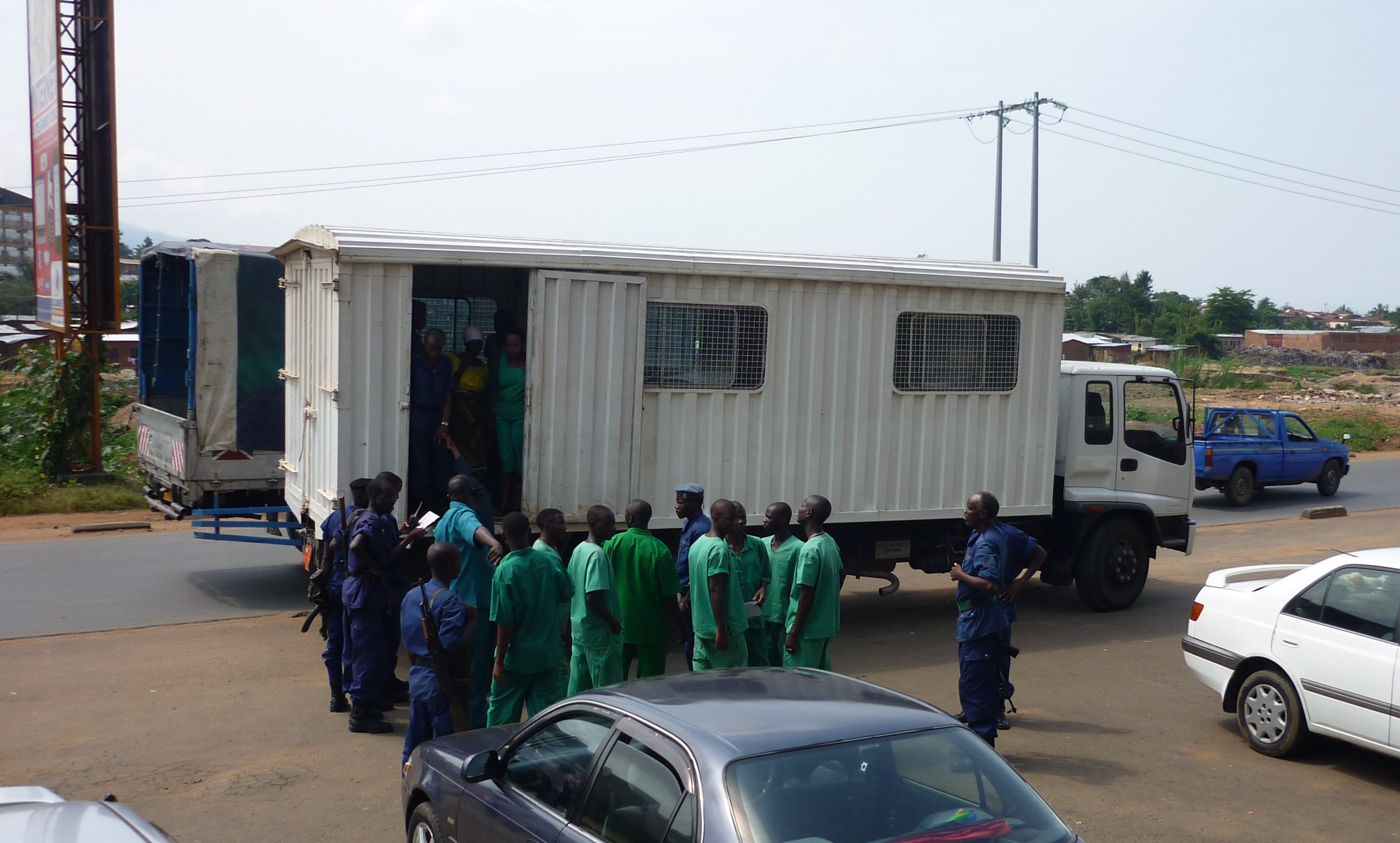
Efforts to comply with the provisions of the newly enacted penal code, which brings up the age of criminal responsibility from 13 to 15 years-old, are greatly needed. However, when operating in a system which strives to rebuild from ashes, the key to reform is sometimes in the provision of the most basic tools. The Prison Director of Bubanza, Salvator Ngendahayo, recently admitted that he was very enthusiastic about implementing this circular and improving the living conditions in his prison, but that handcuffs crucially lack for wardens to escort detainees to the courtroom. The sad reality is therefore that people, whose guilt has not yet been objectively established, end up languishing in prison because unable to assist to their hearing. The Bubanza Prison occupancy rate - 430% - is amongst the highest in the country. The country’s penitentiary administration is significantly under-resourced: there is only one truck to transport prisoners from and to courts; and, quite frankly, after seeing the state of the vehicle at Mpimba Prison in late June 2009, we cannot seriously imagine that it can meet the demands of the country’s 6837 pre-trial detainees (May 2009 data from the Burundian Penitentiary Administration). Lack of transportation therefore means that, guilty or not, some detainees can stay up to 9 years waiting to appear before the judges. This is a “pretty” long period of time considering that life expectancy for men is equal to 51 years (according to 2009 data from the CIA World Fact book). This situation is unacceptable in the light of the principle of presumption of innocence which is enshrined in Burundi’s Constitution (art. 40).

rdtable3_burundi_8_police-escort-guards_resized.JPG

Above: Bubanza Prison wardens lack handcuffs to escort detainees to the courtroom; here with defendants that IBJ volunteer lawyers eventually helped get released, July 2009. (Photo by Astère Muyango).

The urgency of the situation urged DĂ©ogratias Suzuguye, the Director of the Penitentiary Administration, whom IBJ delegation has already met twice, to invite IBJ to take part in a newly set up Task Force (”Plan d’action sur la maĂ®trise de la population carcĂ©rale 2009-2010″) whose main objective is to reduce prison overcrowding in 2009-2010. Specifically, the Task Force seeks to reduce pre-trial detention through improved coordination among the major stakeholders, institutional capacity-building and enhanced respect for the criminal procedures, in particular when it comes to delays. The hope is to expedite trials, have magistrates resort to pre-trial detention in the least cases possible, and make sure the accused are aware of their rights and legally assisted throughout the proceeding. This is a formidable window of opportunity for IBJ which, three years after its initial trip to Burundi, clearly has had an impact on building a climate for reform in Burundi.

p1000571_resized.JPG

Above: From left to right: Karen Tse, IBJ Founder and CEO, Déogratias Suzuguye, the Director of the Penitentiary Administration and Astère Muyango, IBJ Burundi Fellow and Country Manager meeting on June 26th, 2009. (Photo by Fanny Cachat)

[Slashdot] [Digg] [Reddit] [del.icio.us] [Facebook] [Technorati] [Google] [StumbleUpon]

Les médias au Burundi: un levier pour accompagner les réformes du système de justice pénale?

Friday, September 18th, 2009

IBJ n’est installĂ© que depuis rĂ©cemment au Burundi. Le pays ne disposant que d’une très faible couverture internet, ils ne sont au dĂ©but qu’une poignĂ©e de courageux dĂ©fenseurs des Droits de l’Homme Ă  prendre connaissance des activitĂ©s de notre ONG, notamment par l’intermĂ©diaire de la communautĂ© des JusticeMakers. La première rĂ©elle apparition d’IBJ dans les mĂ©dias burundais se fera donc Ă  l’occasion de la tenue de la première session de formation Ă  la pratique pĂ©nale qui se dĂ©roula en mai 2008 Ă  Bujumbura. Depuis, Astère Muyango, ancien participant Ă  la compĂ©tition des JusticeMakers, est devenu le premier fellow d’IBJ au Burundi et, appuyĂ© par une petite Ă©quipe dynamique, s’efforce de mener Ă  bien les activitĂ©s visant Ă  amĂ©liorer le quotidien des personnes dĂ©tenues, l’accès Ă  une justice Ă©quitable, et restreindre l’usage de la torture. En dĂ©pit des difficultĂ©s administratives rencontrĂ©es dans le processus d’accrĂ©ditation, il n’en demeure pas moins qu’IBJ reste Ă  l’affĂ»t de la moindre opportunitĂ© pour populariser sa cause. La deuxième session de formation Ă  la pratique pĂ©nale, organisĂ©e cette annĂ©e entre le 29 juin et le 03 juillet, fut ainsi l’occasion de faire une nouvelle fois parler les mĂ©dias burundais. La tĂ©lĂ©vision nationale (RTNB) put ainsi filmer toute la dĂ©lĂ©gation venue spĂ©cialement de Genève ainsi que les diffĂ©rents participants dans le feu de l’action. Mehdi et Karen, bien secondĂ©e par Fanny pour la traduction, eurent droit aux honneurs de l’interview pour la version française du journal, alors que Pierre-Claver Mbonimpa, prĂ©sident de notre partenaire local APRODH, se chargea de la version Kirundi. Ces passages aux heures de grande Ă©coute furent complĂ©tĂ©s par plusieurs articles dans la presse Ă©crite et radiophonique relatant la richesse des dĂ©bats mais aussi le chemin qu’il reste Ă  parcourir afin de parvenir Ă  un fonctionnement Ă©quitable de la justice au Burundi.

img_4929_musicians_resized.jpg

Ci-dessus: Des participants à la marche contre la torture organisée par USAID à Bujumbura le samedi 27 Juin 2009 (Photo de Nathalie Mohadjer)

Un mois plus tard, IBJ prenait la direction de Bubanza pour y tenir une table ronde consacrĂ©e au phĂ©nomène de la dĂ©tention prĂ©ventive et des consĂ©quences qu’il peut engendrer en terme de surpopulation carcĂ©rale. Elle fut prĂ©cĂ©dĂ©e de plusieurs sessions de distributions de posters servant lĂ  aussi Ă  informer de leurs droits les populations rurales n’ayant souvent pas accès aux informations diffusĂ©es Ă  l’Ă©chelle nationale. Cette table ronde fut un franc succès au regard des rĂ©sultats obtenus qui ne manquèrent pas d’ĂŞtre soulignĂ©s dans les mĂ©dias rĂ©gionaux dĂ©pĂŞchĂ©s pour l’Ă©vènement. Les Ă©chĂ©ances Ă  venir, nouvelles tables rondes ou dĂ©but des activitĂ©s d’aide juridictionnelle, reprĂ©sentent autant de possibilitĂ©s de mĂ©diatisation, mais de part ces tĂ©moignages, IBJ commence dĂ©jĂ  Ă  s’inscrire dans le paysage burundais dans son domaine de prĂ©dilection.

img_6109_resized.jpg

Ci-dessus: Sensibilisation médiatique sur les murs du Tribunal de Grande Instance de Gitega (Photo de Nathalie Mohadjer)

Mais au-delĂ  de l’action d’IBJ, c’est bien la question du fonctionnement mĂŞme de la justice qui tend Ă  prendre une place centrale au Burundi, les diffĂ©rents acteurs semblant prendre conscience que la paix et la dĂ©mocratie ne pourront ĂŞtre garantis sans un fonctionnement efficace et Ă©quitable du système. Le Bureau intĂ©grĂ© des Nations Unies au Burundi (BINUB) et certaines ONG ont ainsi eu un rĂ´le crucial dans la mĂ©diatisation de l’aspect respect des Droits de l’Homme et des personnes dĂ©tenues dans le processus de rĂ©conciliation nationale. Ces organisations ne manquent pas de convoquer la presse Ă  chacune de leurs interventions et leurs manifestations sont rĂ©gulièrement retransmises par les mĂ©dias locaux et nationaux. Cette place prise dans les mĂ©dias tend dès lors Ă  correspondre avec un changement de mentalitĂ© des dĂ©cideurs. Sans que l’on puisse exclusivement en attribuer le mĂ©rite Ă  la mĂ©diatisation du travail des ONG, il est en effet indĂ©niable que les instances judiciaires semblent plus ouvertes au dialogue et enclines Ă  accepter les appuis non gouvernementaux Ă  la rĂ©forme du système judiciaire. De cette manière, l’administration pĂ©nitentiaire, le corps des magistrats, la police judiciaire et le barreau ont pleinement jouĂ© le jeu des tables rondes d’IBJ en facilitant la participation de leurs membres. Plus important, les recommandations ont Ă©tĂ© suivies d’effets concrets avec la tenue d’un conseil spĂ©cial aboutissant aux libĂ©rations rapides de prisonniers en dĂ©tentions irrĂ©gulières dans la province de Bubanza. Cette tendance est Ă©galement perceptible au niveau ministĂ©riel avec la parution rĂ©cente d’une circulaire visant Ă  s’attaquer Ă  la surpopulation carcĂ©rale en ciblant deux catĂ©gories de dĂ©tenus pouvant bĂ©nĂ©ficier d’une mesure de libĂ©ration. Cela concerne les mineurs de moins de 15 ans, dans le but de se mettre en conformitĂ© avec le nouveau Code PĂ©nal, et les prĂ©venus ayant passĂ©s 12 mois en dĂ©tention prĂ©ventive alors qu’ils encourent une peine ne dĂ©passant pas 5 ans de servitude pĂ©nale (art.75 du Code de ProcĂ©dure PĂ©nale). Enfin, un projet d’envergure ayant pour but de limiter le recours Ă  l’emprisonnement est actuellement en cours d’analyse, et devrait impliquer les membres de la sociĂ©tĂ© civile autant que les instances officielles. Ces prĂ©mices de changements institutionnels se rĂ©vèlent au final très encourageants, et IBJ compte bien faire entendre sa vision originale et novatrice de la promotion des Droits de l’Homme et apporter sa pierre Ă  l’Ă©dification d’un système mettant la dignitĂ© humaine au cĹ“ur de ses prĂ©occupations.

[Slashdot] [Digg] [Reddit] [del.icio.us] [Facebook] [Technorati] [Google] [StumbleUpon]